Mountain View centers nature and biodiversity in parks planning

Encouraged by SCVBA, GreenSpacesMV, and the Sierra Club, the Mountain View City Council took important steps to place nature, biodiversity, and everyday access to green space at the core of its Parks & Recreation Strategic Plan. Community input emphasized that trees, pollinator habitat, shade, and unprogrammed green space are essential park features, not optional add-ons.

Council responded. Members supported reframing the vision to “put nature first,” and in a 6 to 1 vote elevated biodiversity, including natural parks, to a standalone goal. Council also directed staff to revisit how trails are counted to ensure equity and to re-examine privately owned open spaces (POPAs) so they do not substitute for meaningful public parks. The discussion also highlighted the need to integrate nature into everyday park management, not just major capital projects.

The revised draft reflects these improvements. Biodiversity and natural parks are now clearly elevated, and natural elements are better recognized as core park amenities.

What comes next: Implementation.

This includes taking every opportunity, large and small, to enhance habitat, increase native planting, and expand tree canopy across the park system. These improvements should occur not only through major projects but also through routine upgrades and maintenance.

Recent City-led projects show why follow-through matters. At the planned police and fire headquarters, the City proposes removing 76 trees, including 42 heritage trees, with limited native replacement . The Parks and Recreation Commission pushed back, citing insufficient canopy and lack of native planting, and called for a revised plan.

City projects should set the standard. We hope future projects fully reflect the strengthened direction of the Strategic Plan and consistently deliver on its commitments to biodiversity, canopy, and habitat.
Palo Alto Vote on Bird-Friendly Building Ordinance (March 16)

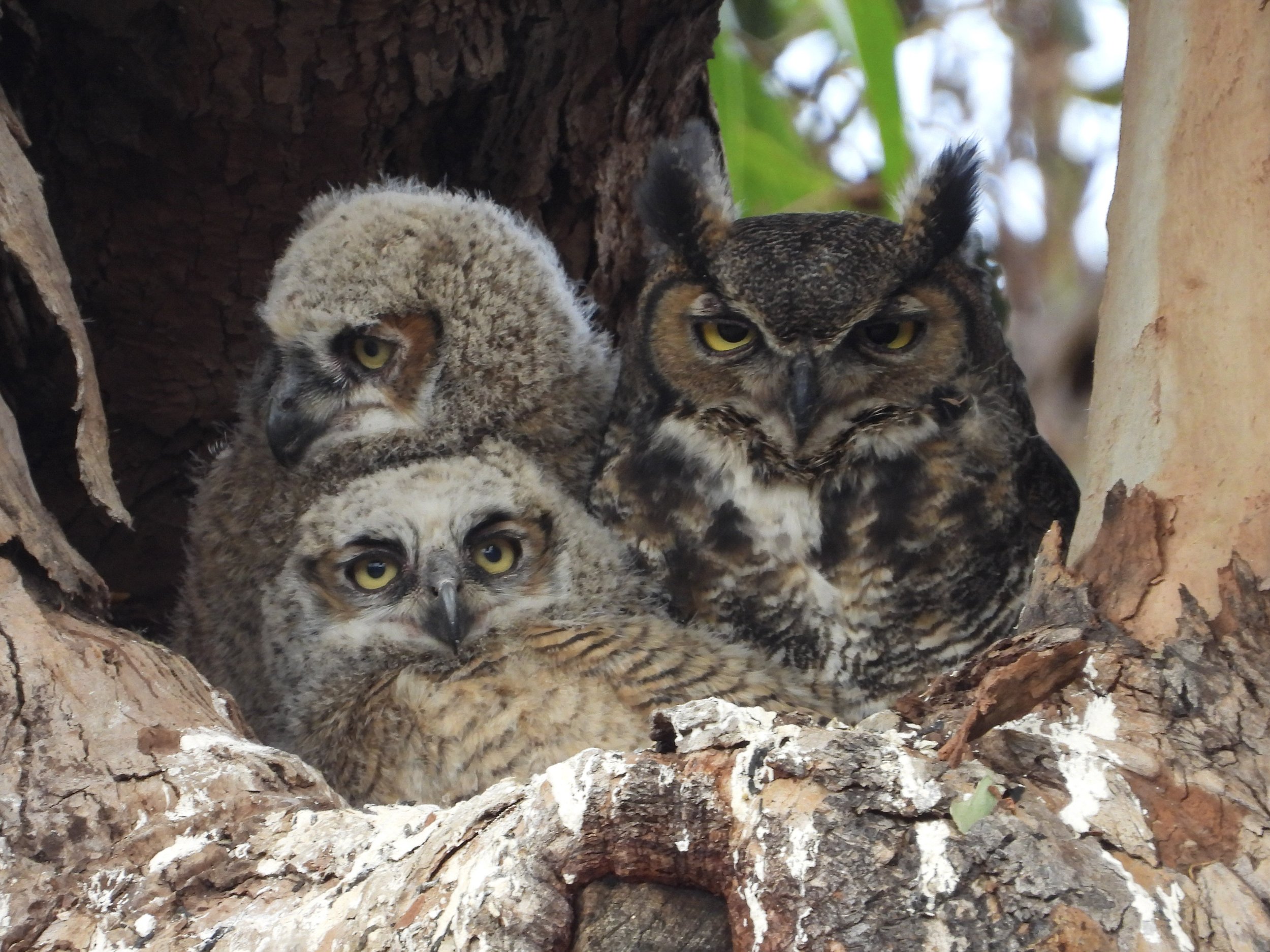
Great-Horned Owls: Sarah Chan

What is happening?

On Monday, March 16, the Palo Alto City Council will vote on a Bird-Friendly Design Ordinance to reduce bird deaths caused by collisions with glass buildings.

The proposed ordinance would require bird-friendly treatment for large expanses of glass in new buildings and major remodels so that birds can see and avoid the glass.  

The proposed ordinance DOES NOT APPLY to:

  • Residential buildings under 35 feet outside the Bird Sensitive Area. Bird Sensitive      Areas are only in the Baylands (east of 101) and the foothills (west of      Foothills Expressway), so most of the City residential areas are exempt,      up to 35-ft.

  • Routine window replacement is not regulated anywhere in the city, unless it      requires a building permit and creates a defined bird hazard.

  • Low income housing, Accessory Dwelling Units and Historical buildings are      exempt.

Why is this important?

Scientific research shows that bird populations in North America are declining, and collisions with glass and other human-made structures are a major driver in this decline. It is estimated that every year in North America a billion birds are killed by collisions with windows.

In urban/suburban landscapes, most bird collisions occur at tree-canopy height - from ground level to roughly 60 feet. This is particularly important in Palo Alto, where birds are abundant not only in the Baylands and foothills, but also along creeks and throughout the city’s urban forest.

The proposed ordinance represents years of review and community input. However, staff has recommended changes that could significantly weaken the ordinance, including expanding the 35-foot exemption to all development types, which would exempt commercial buildings. The building areas where bird strikes are most likely to happen will be exempt.

What you can do

1. Send a short email to the Palo Alto City Council. Here is an example for an email:

To: city.council@cityofpaloalto.org

Subject: Please Protect Birds in Palo Alto

Dear Mayor Veenker and Palo Alto Councilmembers,

[Introduce yourself and briefly say why you care about birds and the Palo Alto community. If you have witnessed a bird strike, feel free to share that experience.]

I am writing to ask you to adopt the Bird-Friendly Design Ordinance as drafted.

Please reject staff-recommended changes that could weaken the ordinance, such as expanding the 35-foot exemption to all development types. Most bird collisions occur at tree-canopy height, and expanding this exemption would remove protections where they are most needed.

There are many bird-safe window treatments and design options available, and these should be used rather than exempting commercial buildings.

Thank you for your service to our community.

Sincerely,
(Your name)

2. You may also attend or watch the meeting on March 16 and speak during public comment. You may participate remotely (https://cityofpaloalto.zoom.us/j/362027238)

This item (14) is expected to be discussed after 9pm. As soon as the discussion of item 14 starts, raise your hand. When your name is called, you will have two minutes to speak. You can use the sample letter above as a starting point for your public comment

If you attend in person, you can fill out a public comment slip located at a table near the entrance to the City Council chambers. Once you add your name and the agenda item (Item 14), you can deposit that slip in a basket near the City Clerk’s table. Your name will be called during public comment and you can speak at the podium for two minutes. 

Thank you for helping protect birds in our community.


Fighting Heritage Oaks - Comment on the Upcoming SEIR

Please Comment on the Heritage Oaks Memorial Park SEIR

The City of San José is accepting public comments on the Supplemental Environmental Impact Report (SEIR) for the proposed Heritage Oaks Memorial Park project in the hills above Coyote Valley. The project would introduce a gas-powered crematory, cemetery with lawns, buildings, roads, parking, utilities, and introduce long-term human activity into a largely undeveloped open space landscape that plays an important role in wildlife movement and habitat connectivity.

We are concerned!

  • Crematory, natural gas infrastructure: a crematory is an industrial land use that does not belong in the open space on the ridge between Coyote Valley and Calero reservoir. A better alternative would be placing the crematory in an industrial area of the City. The SEIR does not explore alternative locations for a crematory, and does not adequately analyze the impacts of construction of natural gas infrastructure that is needed to support a crematory. Long-term air and greenhouse gas emissions from the proposed crematory are also not fully analyzed.

  • Wildlife connectivity: The SEIR underestimates landscape-level impacts to wildlife movement between ridgelines and the Coyote Valley floor and relies too heavily on site-level mitigation.

  • Human disturbance and edge effects: Even with limited lighting and no perimeter fencing, roads, structures, traffic, and ongoing visitation would increase noise, nighttime presence, and disturbance in sensitive habitat.

  • Recycled water. Watering lawns, even with recycled water, should be avoided in an era of climate change when water supply is fluctuating. Furthermore, the SEIR does not adequately address construction and groundwater risks associated with the recycled water pipeline.

What can you do?

Please submit a comment expressing these concerns.

Deadline: March 4

Email: Bethelhem.Telahun@sanjoseca.gov

CC: Mayoremail@sanjoseca.gov, District1@sanjoseca.gov, District2@sanjoseca.gov, District3@sanjoseca.gov, District4@sanjoseca.gov, District5@sanjoseca.gov, District6@sanjoseca.govDistrict7@sanjoseca.gov, District8@sanjoseca.gov, District9@sanjoseca.gov, District10@sanjoseca.gov

BCC: Advocate@scvbirdalliance.org

Subject Line: Heritage Oaks Memorial Park SEIR

Suggested Opposing Statement (feel free to copy/paste or elaborate):

I oppose approval of the Heritage Oaks Memorial Park project and the Supplemental EIR as proposed. The SEIR does not adequately address impacts to wildlife connectivity, habitat fragmentation, and the long-term consequences of introducing roads, structures, and sustained human activity into a largely undeveloped hillside landscape.

The proposed crematory would introduce ongoing air emissions and an industrial land use into this sensitive setting. The SEIR fails to adequately analyze these impacts or to evaluate reasonable alternative locations that would better protect wildlife, open space, and nearby communities.

Please do not allow a crematory in this location.

Let’s Give Sunnyvale Back Its Night Sky

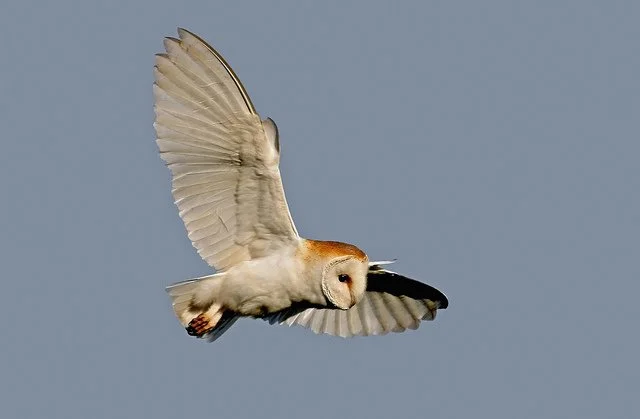
Barn Owl: Tom Grey

Let’s Give Sunnyvale Back Its Night Sky (and the Birds Will Thank You!)

Ever notice how hard it is to see the stars anymore?
Or how birds, bats, and other nighttime wildlife seem a little… confused?

Too much artificial light at night isn’t just unnecessary — it disrupts wildlife, affects human health, and washes out the beauty of the night sky. The good news? We can fix this, easily and affordably.

Cities like Cupertino, Los Altos, Palo Alto, and Brisbane already have Dark Sky ordinances, and Mountain View is working on one now. These policies improve lighting quality, save energy, protect wildlife, and still keep our neighborhoods safe.

Now it’s Sunnyvale’s turn.

By signing this petition, you’re simply asking the Sunnyvale City Council to start a conversation about a Dark Sky Ordinance, using best practices developed by Dark Sky International. No rigid demands — just a thoughtful, community-based discussion about better lighting.

Please take a moment to sign the petition:
sunnyvaledarksky.org

Let’s make Sunnyvale’s nights healthier, calmer, and more beautiful — for people, birds, and all the creatures who depend on the dark.

Thank you for lending your voice!

Rani Fischer
Chair, Environmental Action Committee
Santa Clara Valley Bird Alliance