
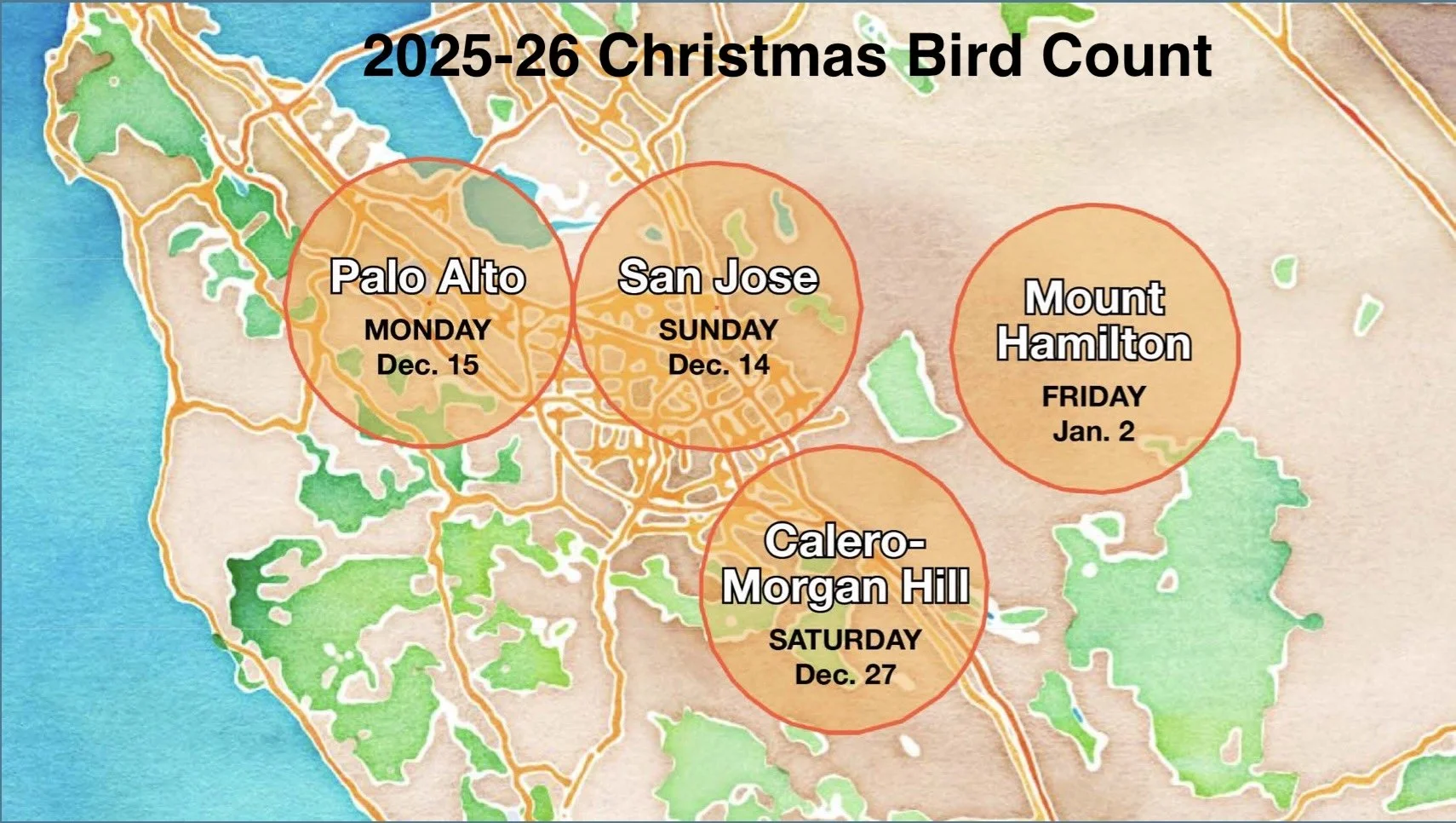
2025-26 Christmas Bird Counts
Barry Langdon-Lassagne—Aggregator
Nearly four hundred volunteers participated in this year’s annual Christmas Bird Counts (CBCs) sponsored by the Santa Clara Valley Bird Alliance. This community-science project gets experienced and new birders canvassing our varied habitats to record the number and species of every bird in a single day. Combined, this data along with CBCs across the country and around the world, provide a snapshot of the health of our bird populations and an ability to see the changes over time. SCVBA sponsors the San Jose, Palo Alto, Calero-Morgan Hill and Mount Hamilton counts.
This year 397 counters tallied 199,985 birds across 195 species, also identifying subspecies, hybrid, and count-week birds. See the table “2025-2026 SANTA CLARA COUNTY CHRISTMAS BIRD COUNTS” for a detailed listing of the observations. For past count tables, see our Past Christmas Bird Counts page.
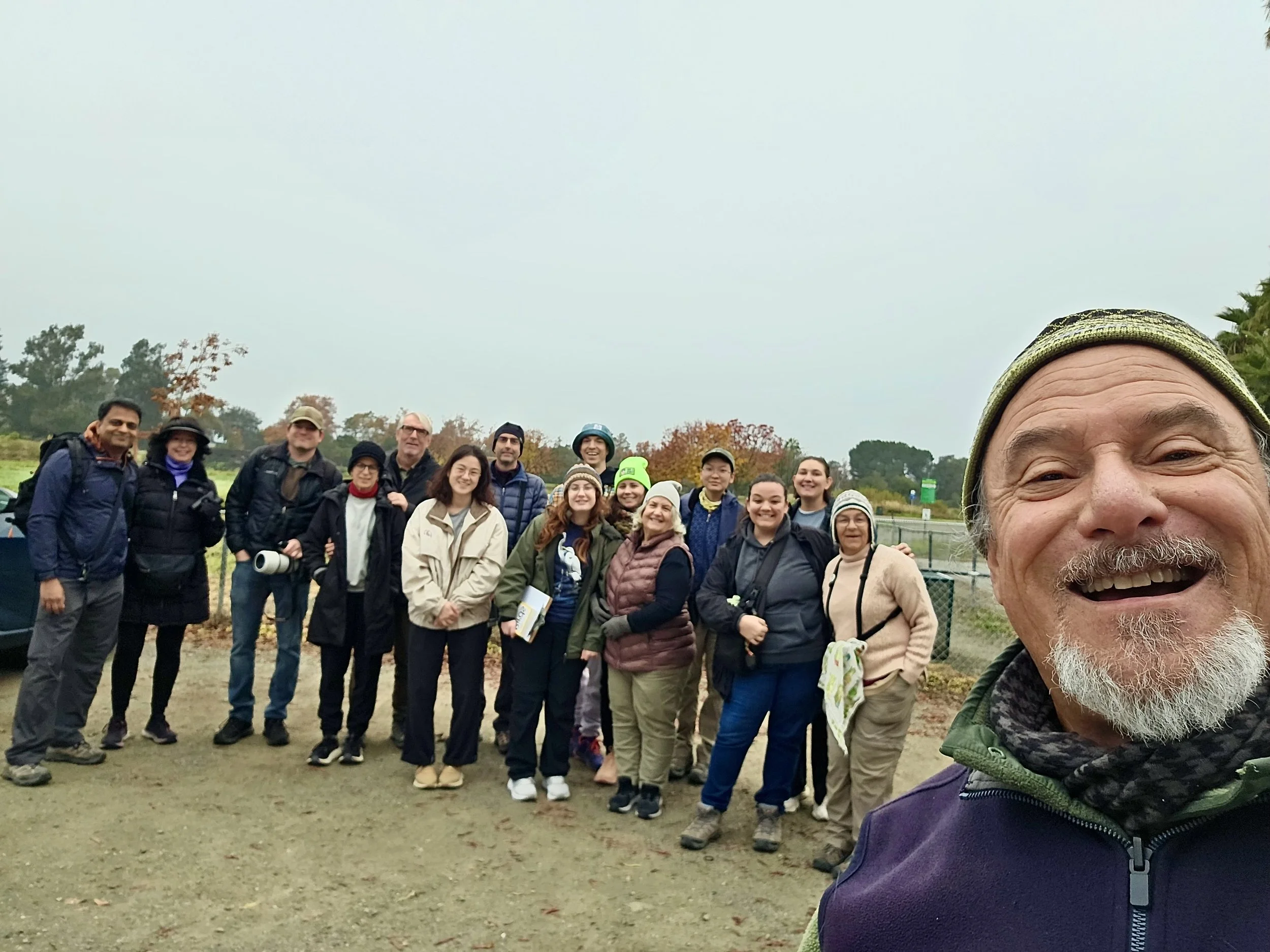
Howard Friedman, Sector leader and his immense crew of birders prepare first thing in the morning to head in all directions to bird Alum Rock Park, San Jose CBC
San Jose—Sunday, December 14
On Sunday, December 14th, 2025, 116 volunteers headed into the field looking for birds around the San Jose count circle. It was cold and foggy and those birders in the foothills struggled to see distant trees, the sky, even the bushes!
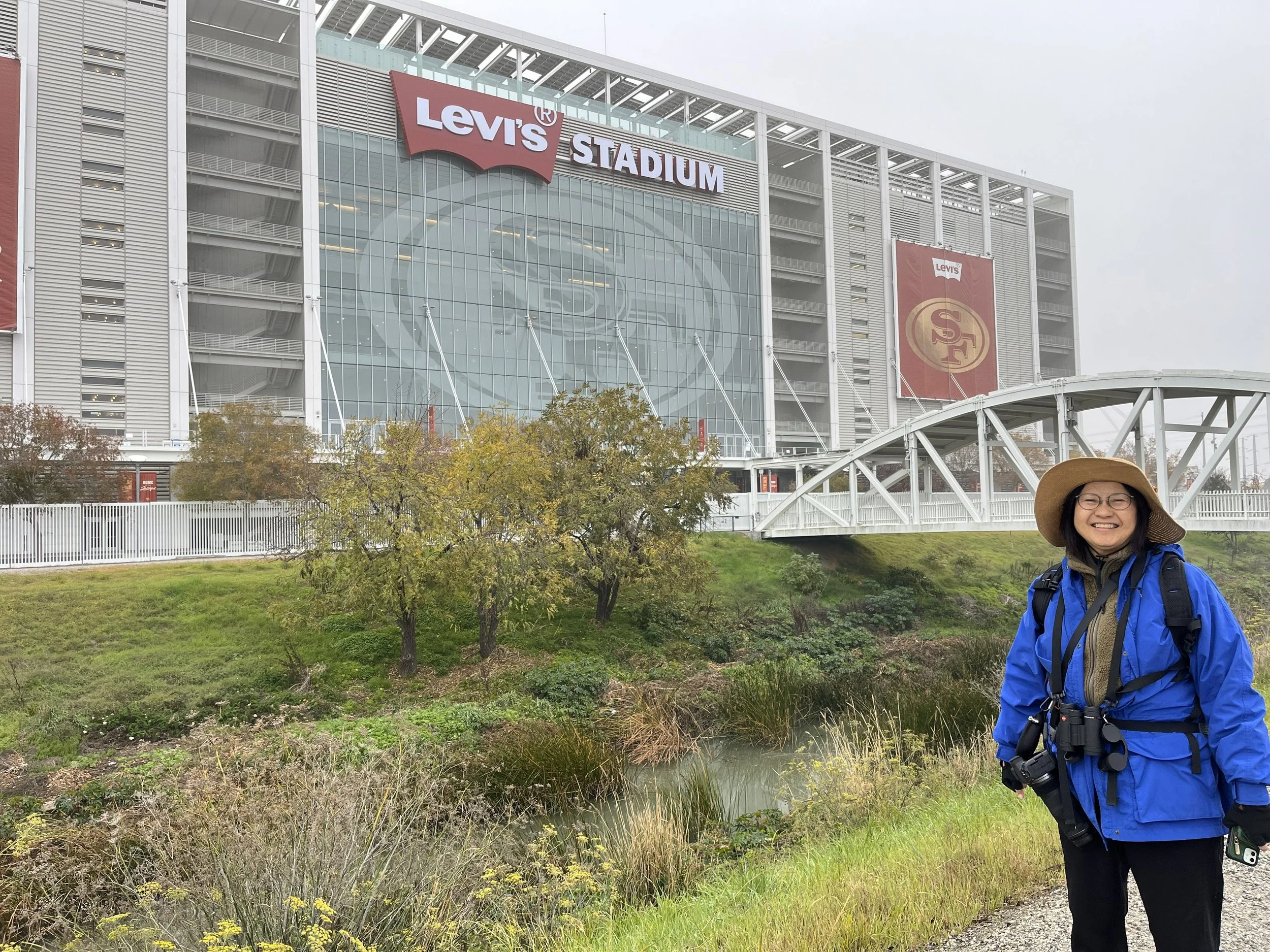
Yuki Ikezi near Levi Stadium, Agnews Sector, San Jose CBC. Photo by Ann Hepenstal
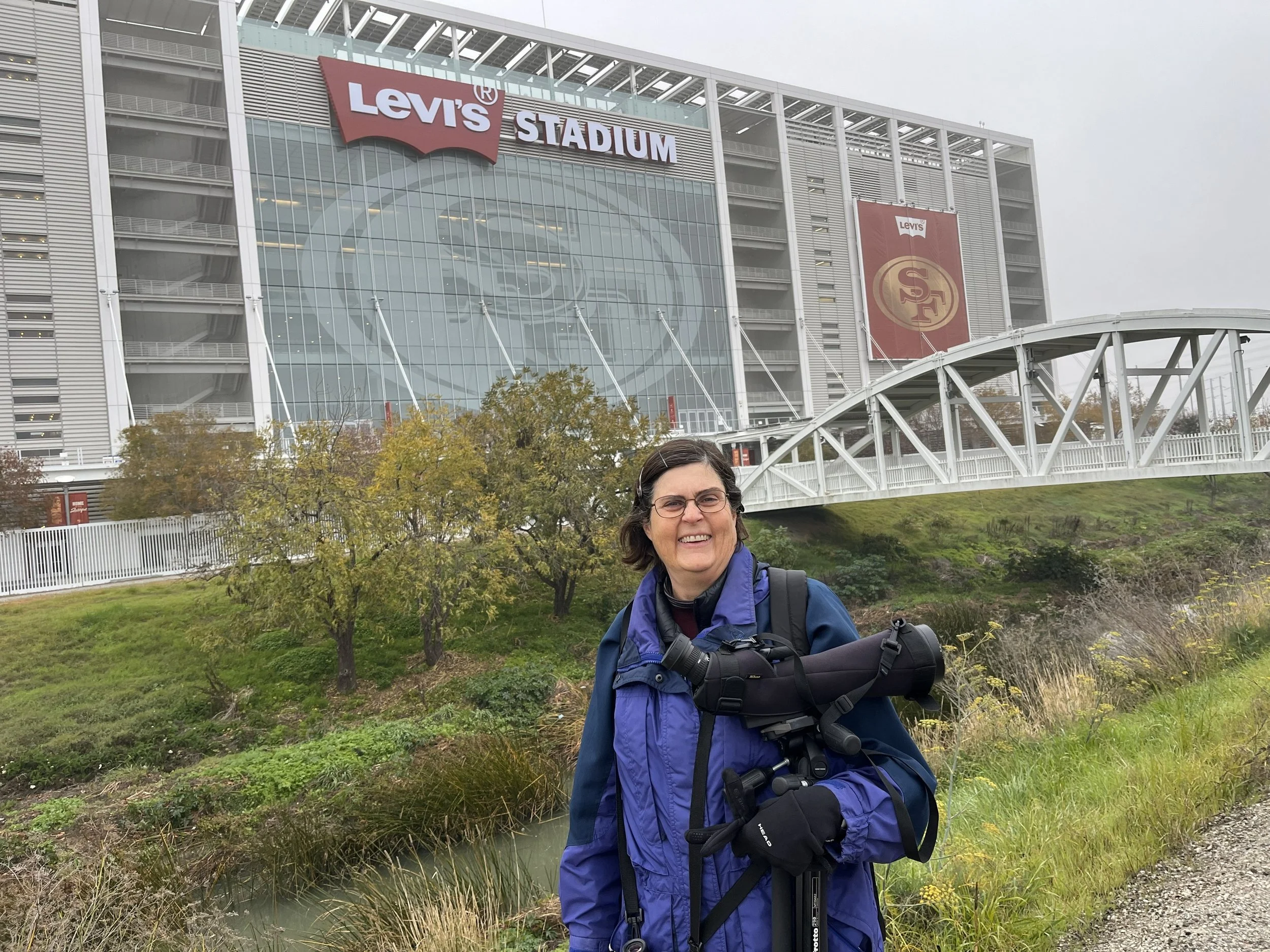
Ann Hepenstal near Levi Stadium, Agnews Sector, San Jose CBC
Some real goodies showed up on the water, including a Snow Goose (A22/23/M4 crew), Ross's Goose (San Jose WPCP and at Ed Levin Park), Mute Swan (Pond A18), Blue-winged Teal (Tivo Pond) and Eurasian Wigeons found by several parties at Alviso sector. A Pacific Golden-Plover and a Lesser Yellowlegs were seen near pond A16. Tree Swallows were taken off the write-up list this year, saving a lot of people from getting writer's cramp as more than 180 of them were seen around Alviso and over Calaveras Reservoir. Violet-green Swallows and Barn Swallows, all still considered uncommon write-up birds during the winter in the area were seen in Alviso as well as Pygmy Nuthatches at Technology Park. A Brewer's Sparrow was found near pond A15 and a Swamp Sparrow near pond A17.
A Vesper's Sparrow was located at Ed Levin County Park. Not too far away, a Ferruginous Hawk was seen at Calaveras Reservoir. It was actually seen by two different parties, but we believe it was probably the same bird. Also at Calaveras Reservoir, two Blue-gray Gnatcatchers and a Common Loon was heard and seen peeking through the mist.
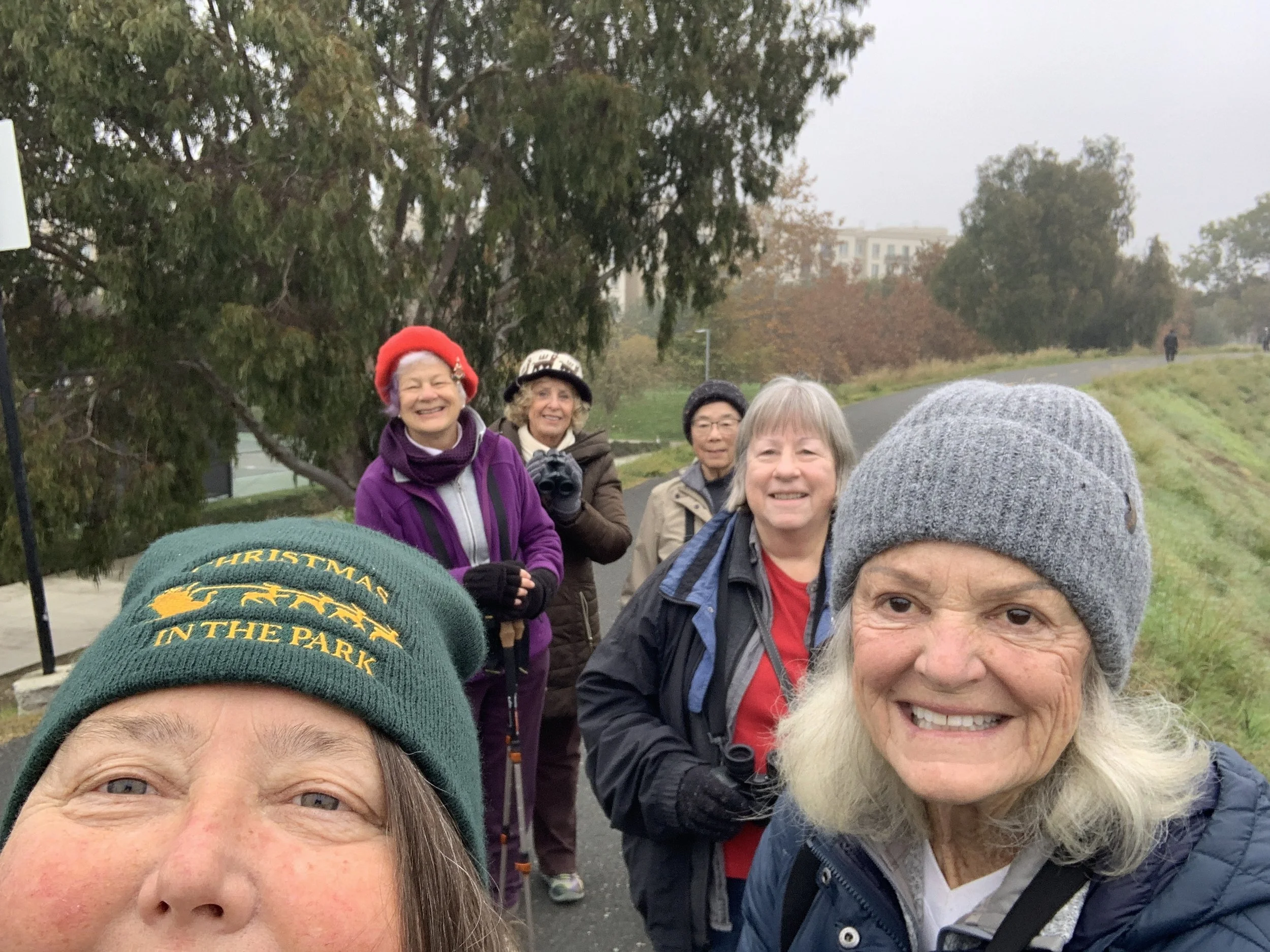
Alison Turner and her Agnews Sector Crew, San Jose CBC
Most of the birds missed are not surprises. Wood Duck, Surf Scoter, Sanderling and a host of other birds we often miss were among them. It is always sad when no one is able to look for Northern Pygmy-Owl. Northern House Wren is probably the most unlikely miss, and yet with all that fog, perhaps we are lucky to have seen 168 bird species.
Burrowing Owl, Whimbrel, American Bittern, Hutton's Vireo, Rock Wren, Varied Thrush and Tri-colored Blackbird all landed in the category of "We're lucky to have seen them." Each of these birds are often missed and they were all only found by one party who could have easily been looking the wrong way and not noticed them. One bird that need not be worried about, apparently would be the Ruddy Duck, for which more than one hundred eighteen thousand individuals were counted that day.
We had our first feeder watcher this year, and made our first use of software being developed by National Audubon Society to improve registration for the CBC. It's a work in progress. We'll continue to work on it. It is great to see that time and effort is being put into upgrading the systems that are used to register birders, as well as enter data.
Thank you to all the sector leaders who step up every year and the birders who make this an annual tradition!
Mike Azevedo, Compiler
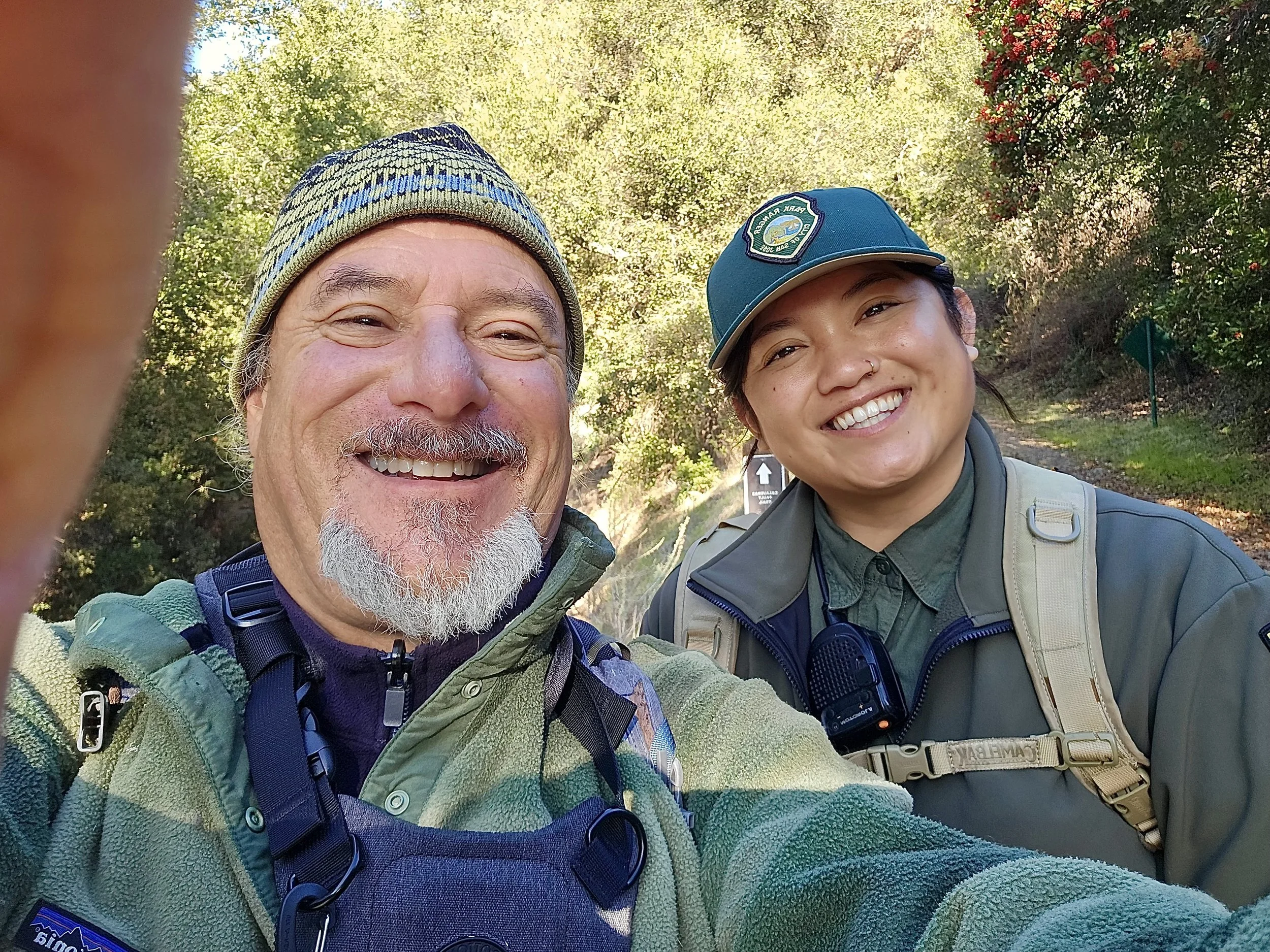
Howard Friedman really appreciated the ride up to Cherry Flats Dam in the company and with assistance from Ranger Tam
Palo Alto—Monday, December 15
The Palo Alto CBC held on Dec. 15, 2025 had 152 participants, typical of the last few years. In contrast to the rain of the previous two counts, the highest-elevation parties counted in sunshine. But morning low clouds amounted to fog in many lower locations. Generally-mild weather ahaed of the count may have helped keep species diversity low: 162 as compared to a 15-year average of 165.5.
We missed 8 species which have been found on at least 2/3 of counts in that recent timeframe: Barrow's Goldeneye (one hybrid Goldeneye was seen), Common Merganser, Ridgway's Rail, Ruddy Turnstone, Loggerhead Shrike, Swamp Sparrow, Brown-headed Cowbird and Great-tailed Grackle. The Rail and Cowbird were observed during count week. Shrike numbers have been dwindling, 0 or 1 for the past 4 counts, and 11 years since we recorded more than 2.

Black Skimmer at Mountain View Shoreline Lake, Carter Gasiorowski, Palo Alto CBC
Counters did find some relatively unusual species. There was a Snow Goose at Bedwell-Bayfront Park, while 24 of the more-regular Greater White-fronted Goose was a nice showing, as was 4 Eurasian Wigeons. Black Rail was found for the third count in a row, previously very rare. 2 Black Oystercatchers were again near the Dumbarton Bridge, as were most of the 60 Snowy Plovers, a new record and three times higher than on any count in over 55 years. 2 Red Knots were along Adobe Creek. There were 2 Lesser Yellowlegs and 2 Black Skimmers, a species which used to winter more regularly in the count circle. A stunning Lewis's Woodpecker was found at Monte Bello OSP. Lastly, 5 or 6 Northern House Wrens was an impressive total. There were no other rare passerines.

Snow Goose at Bedwell-Bayfront Park, Eric Goodill, Palo Alto CBC

Lewis’s Woodpecker at Monte Bello Open Space Preserve, Vivek Tiwari, Palo Alto CBC
This was not a year for irruptive species: just 7 Pine Siskins and a single Red-breasted Nuthatch. Numbers of American Robins returned to the middle of their wide numerical range, after 2024's extremely low count. At the countdown there were comments about a shortage of Zonotrichia sparrows, but while the number of Golden-crowns was somewhat low, White-crowns maintained their rather-steady appearance in the circle.
As for systematic trends, I have not done the analysis needed to reach most quantitative conclusions, and in many species (especially most waterbirds) large year-to-year variations mask shorter-term trends. But in some cases apparent trends do stick out at a glance. For example, Wild Turkey and Oak Titmouse numbers have been creeping up and again reached new highs. The same is the case for Pygmy Nuthatch, which seems to be spreading in the count circle. The 11 and 12 Spotted Sandpipers on the last two counts also seem to cap a significant recent rise. The 11 Green Herons were a striking high (previously 6) whether or not part of a trend.
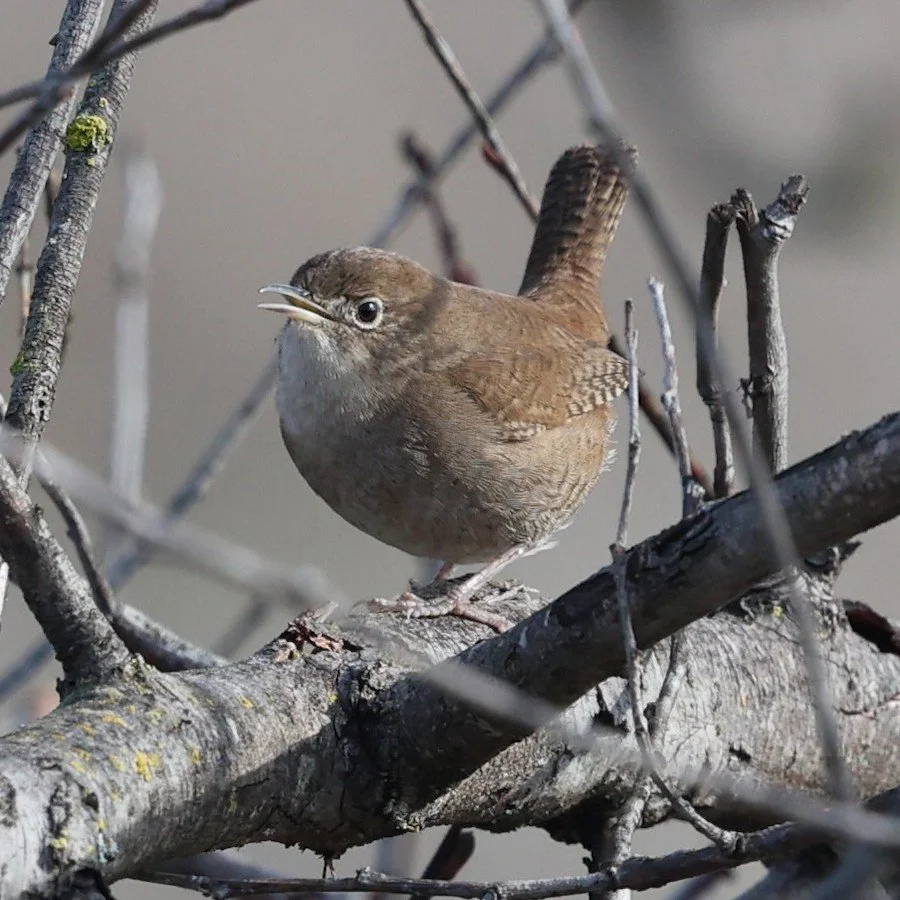
Northern House Wren at private location, Pete Dunten, Palo Alto CBC
On the downside, Horned Grebe has been more difficult to find on recent counts, and there have been notably-decreasing numbers of California Thrasher and (less strongly) Northern Mockingbird. Blackbird numbers have also decreased. Some of this may be due to habitat changes, some might represent over-interpretation. Finally, there is the saga of Eurasian Collared-Dove. The first one appeared on our count in 2008. The number grew to 72 in 2019, but has subsequently been decreasing, down to just 9 on the latest count.
Many thanks to all who participated, to our eight sector coordinators for their hard work, and to Ann Hepenstal for organizing the counting effort and the countdown dinner.
Al Eisner, Compiler

Linda Johnson at Sunnyvale Golf Course, Palo Alto CBC
Calero-Morgan Hill—Saturday, December 27
Saturday, December 27 began with light rain but cleared around 10am, making a pleasant count day. A record number of counters (103) recorded 145 species, the highest number of species in 8 years.
Perhaps the most unexpected rare bird of the day was a Cassin's Kingbird in Coyote Valley, although that species seems to be gradually moving northward. Also in Coyote Valley were Greater White-fronted, Ross’s, and Cackling Goose - but no Snow Goose. A hybrid Mallard x Gadwall ("Brewer's Duck") was also spotted. A Townsend’s Solitaire was found on the slopes of Mt. Umunhum, and both Grasshopper and Chipping Sparrows made return appearances. Forty-nine Tree Swallows were counted, and a single Violet-green Swallow.
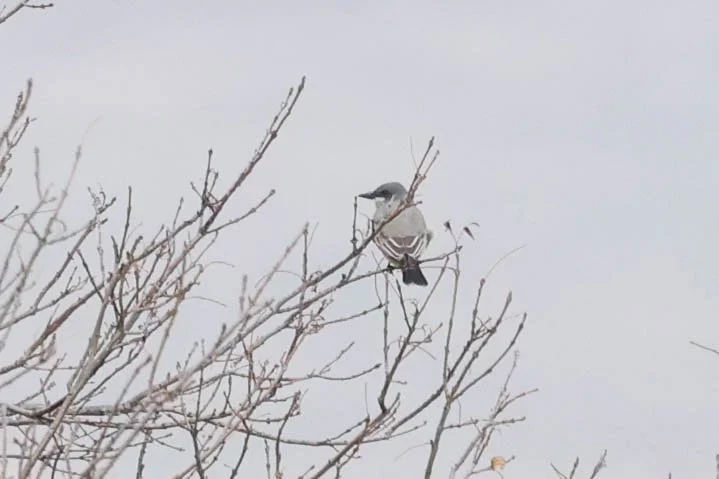
Cassin’s Kingbird by Garrett Lau
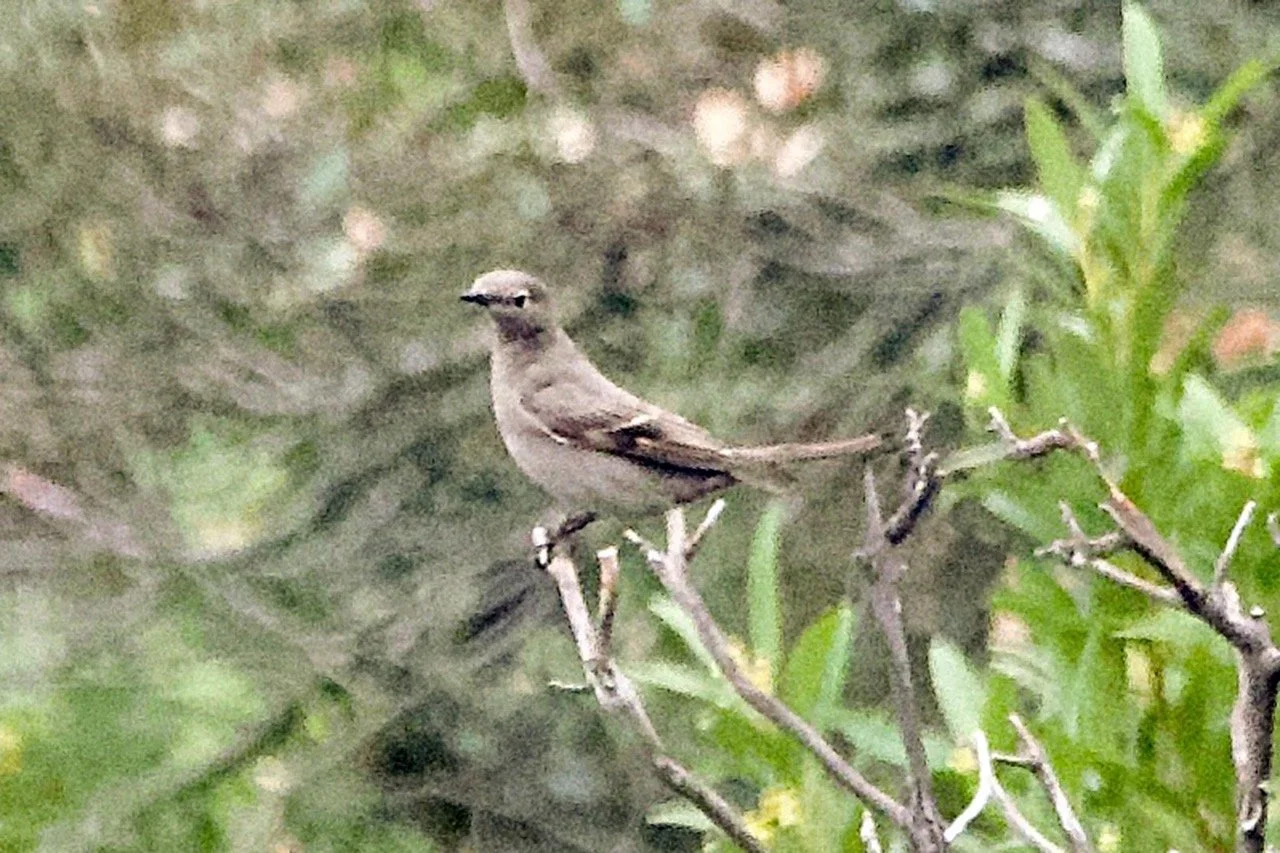
Townsend’s Solitaire, by Taylor Ronsvalle
Although the number of observed species was fairly high for this count, actual numbers of birds was below average for most species. For example, all the expected falcons were spotted, but just one each of Peregrine, Prairie, and Merlin. A few numbers were up: Golden Eagle, Red-tailed Hawk, and Common Raven, three species all trending higher the last few years. Some notable misses, besides Snow Goose, were Short-billed Gull, Burrowing Owl, and Orange-crowned Warbler.
Santa Clara’s south valley demonstrated that it is a fine spot for viewing eagles. On count day Bald Eagles were seen in 5 different count sectors, Golden Eagles in 8 sectors. Golden Eagles were recorded 27 times, conservatively 20 individuals, since some were seen flying over Coyote Valley in the middle of the circle.
For good reason, Coyote Valley is now locally famous, with so many good birds spotted and lots of publicity about the area. A dozen new Christmas Count volunteers specifically asked to count in Coyote Valley because of its reputation as a birding hotspot.
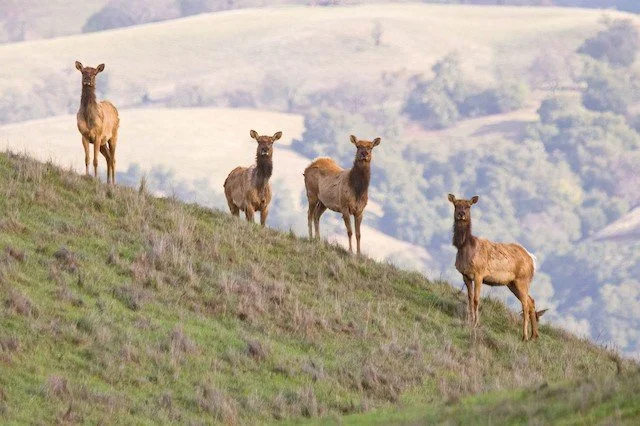
Elk Observing the Observers at Máyyan 'Ooyákma (Coyote Ridge Open Space Preserve), John Sharpen
This count is fortunate that access to good birding areas is generally improving, due to support from many agencies & private landowners. Midpeninsula Regional Open Space District, Peninsula Open Space Trust, Santa Clara Valley Open Space Authority, Santa Clara County Parks, and the Santa Clara Valley Habitat Agency have preserved valuable areas. These agencies plus private entities including Waste Management Inc. and San Felipe Ranch have been very helpful in making normally closed areas available for the bird count.
Our 14 sector leaders did a great job of organizing coverage of their areas, especially with so many new birders, and we received enthusiastic comments from volunteers.
Rick Herder, Compiler
Morgan Hill, California
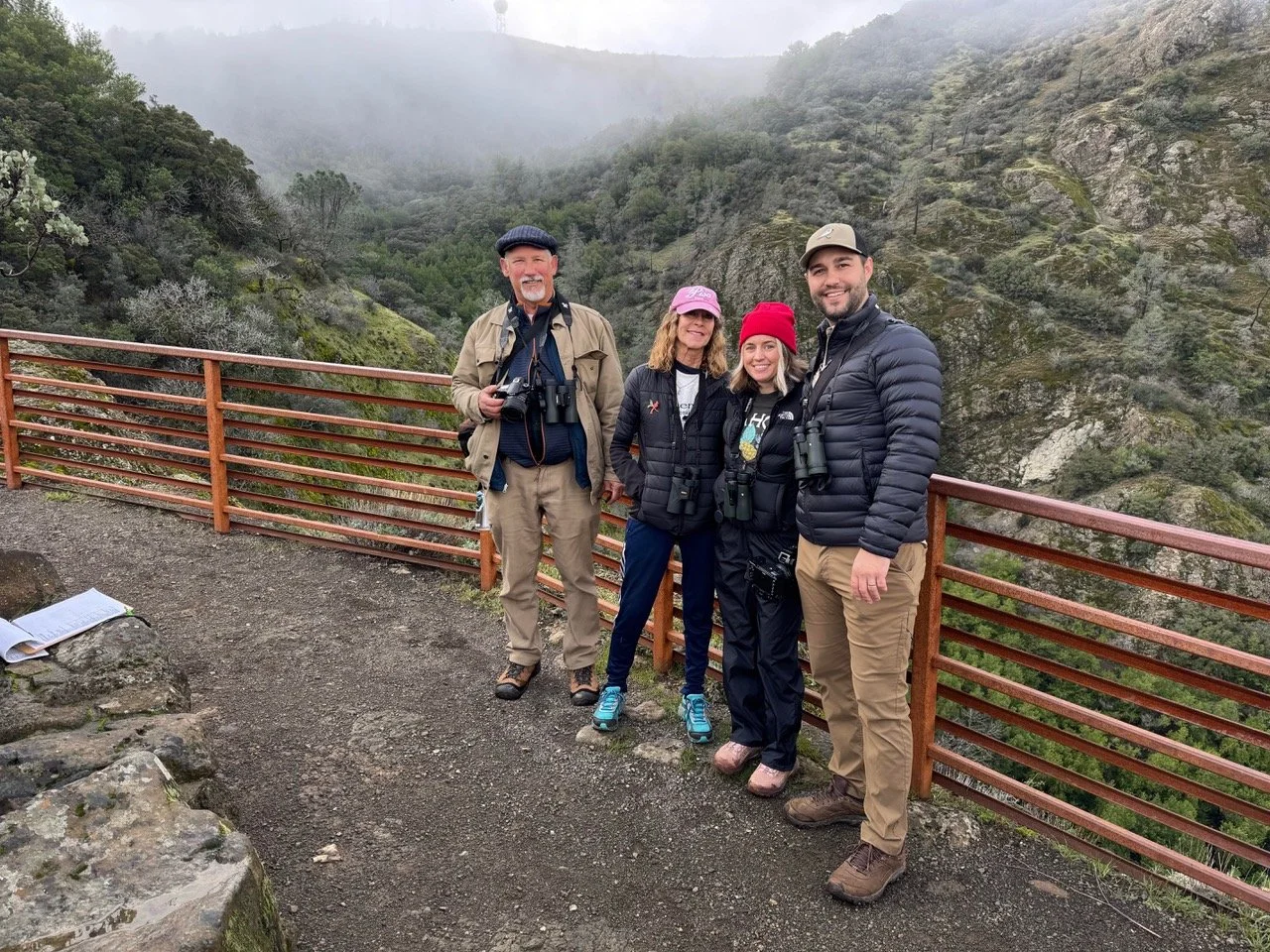
Edward Rooks and team near Mt. Umunhum
Mount Hamilton—Friday, January 2, 2026
We had our count on Friday, January 2, 2026 and, for a change, welcomed clear but chilly weather in the morning. Even the smaller ponds which are normally initially frozen were open. We had very little weather-related access problems since the roads were open and dry. Stream crossings were challenging but all safely navigable.
We had 25 participants and the result was a complete count. We had an average species count coming in at 96 species, but with a low count of only 6,331 individual birds. As to individual species we had a fairly good year for Lawrence’s Goldfinches with 129 tallied. One other target was the Lewis’ Woodpecker and we had a total of 10 which was about average. Vicki Silvas-Young’s team had a hybrid Red-breasted X Red-Naped Sapsucker on Hwy 130 near Skye Ranch. Photo by Ivan Ha. When Vicki went back to her area on Sunday to confirm mileage for the count she had a Greater Roadrunner cross the Mount Hamilton Road in front of her. This is a welcome sign and will be recorded as a Count Week bird. Mike Rogers’ team, found 5 Ferruginous Hawks and 5 Western Screech owls plus a Rock Wren on the Isabel Ranch (private property) this year. Bruce Mast and Sue Stanton had two of our 13 reported Golden Eagles on the San Antonio Valley Ecological Reserve (SAVER) and our only Rufous-crowned Sparrow. Best bird was a Canyon Wren, first for the count in many years, found by Elinor Gates team and photographed by John Tsortos. A Sora was heard calling repeatedly in a large reed bed in the canyon just west of the Arnold Ranch area.
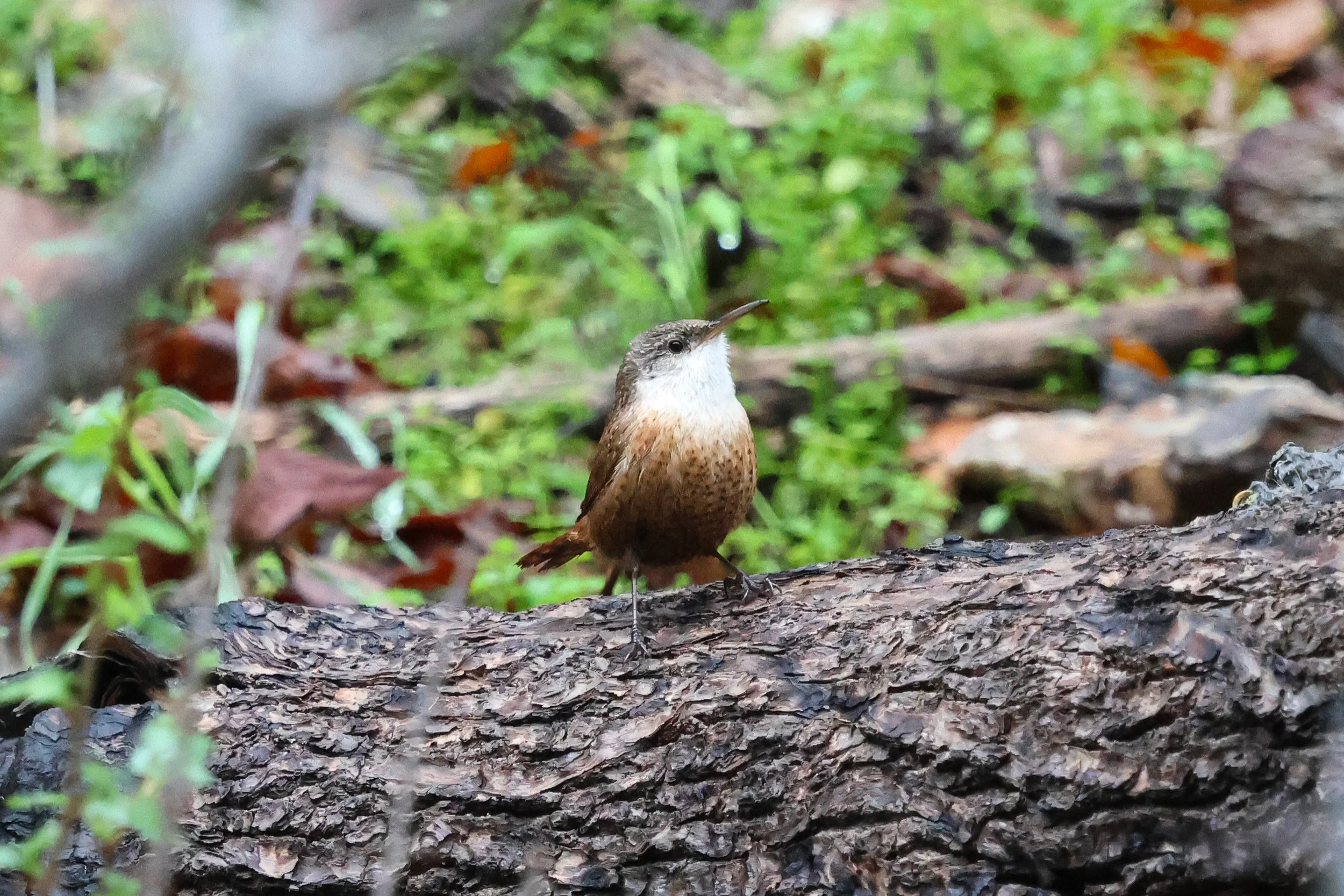
Canyon Wren, John Tsortos, Mount Hamilton CBC
All time high counts were recorded for Common Raven (64), A very good acorn crop produced near record high numbers of Acorn Woodpecker (370). Massive counts of Band-tailed Pigeons (1,109) were reported this year but which is a record high (458 were reported in 2014).
Low counts were for American Wigeon (62), California Quail (528), American Robin (94), Fox Sparrow (13), White-crowned Sparrow (317), Brown-headed Cowbird (1), Eurasian Collared-Dove (41), and Mourning Dove (24).
We missed a few species are often seen such as Wood Duck, Gadwall, Tri-colored Blackbirds, Pine Siskin and Wilson’s Snipe.
A beautiful but quiet day with a good species count but a low number of birds considering the good weather during the day. The weather took a nasty turn as we dined and we were all grateful to be home that evening.
Thanks to our leaders again: Mike Rogers and Mike Azevedo (leading our owling teams), and Vicki Silvas-Young. and especially, Pete Dunten and Dale Stahlecker for doing the long hike on one of the large ranches and to Bruce Mast and Sue Stanton for the long SAVER hikes and Amy Lauterbach and James Yurchenko for tackling the arduous Mule Trail.
Our deepest thanks goes to Elinor Gates for hosting a marvelous compilation feast again this year and leading the team at the top of Mount Hamilton which found our only Brown Creepers and a great count bird: Canyon Wren!!
Bob Hirt and John Tsortos, Co-Compilers
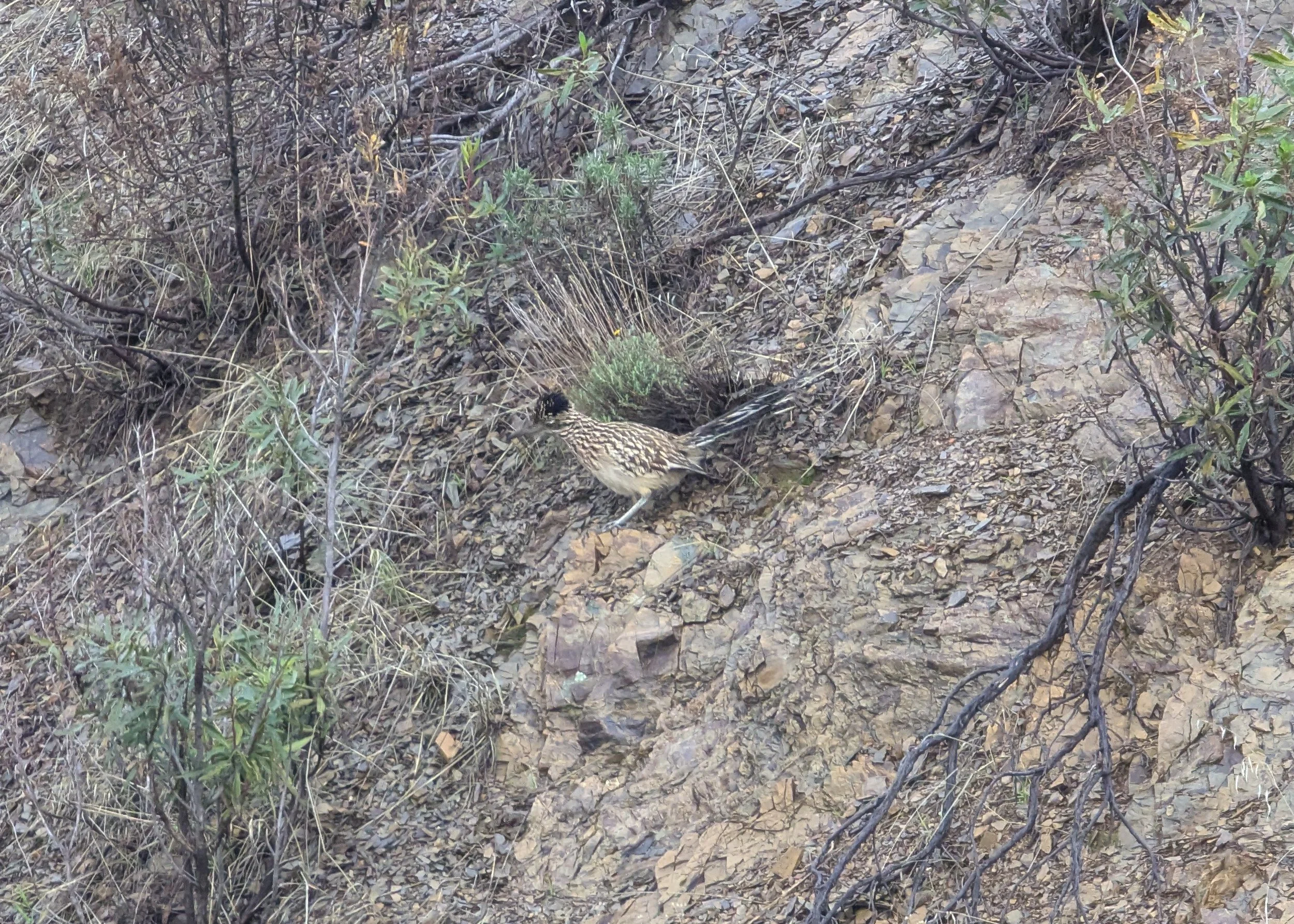
Greater Roadrunner seen during Count Week, but not on Count Day, Vicki Silvas-Young