
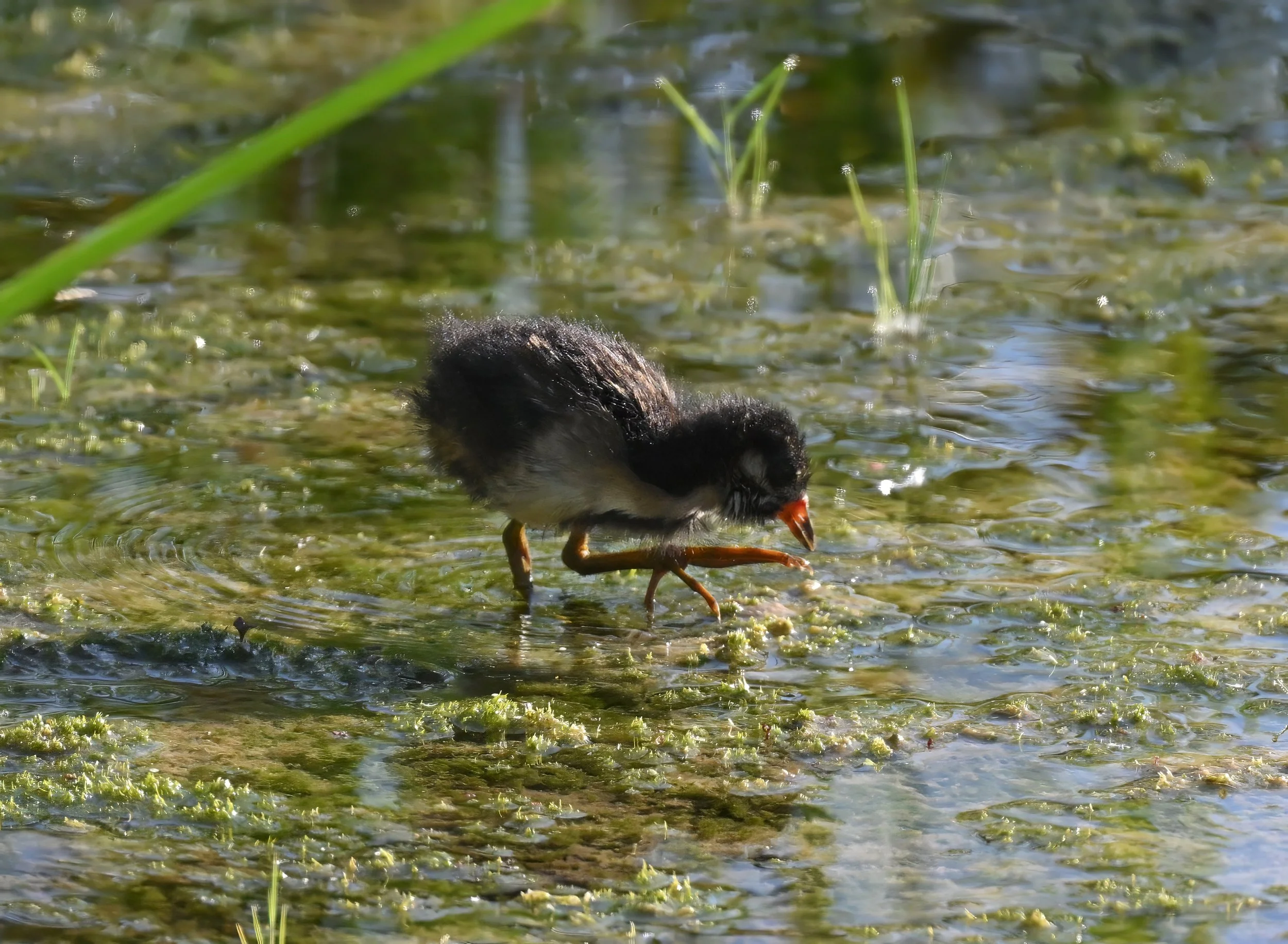
Sora chick: Teresa Cheng
Palo Alto has adopted a bird-friendly design ordinance - an important step toward reducing bird collisions and better aligning development with the natural environment.
This is the culmination of a long effort for our community. At the hearing, nearly all members of the Environmental Advisory Commission were present, and several ceded time to allow for detailed presentations from advocates, including our Santa Clara Valley Bird Alliance Shani Kleinhaus and Sierra Club’s advocate Dashiel Leeds. The outcome reflects both the strength of science and the community’s commitment to protecting birds. This is also a meaningful win for Santa Clara Valley Bird Alliance advocacy.
Importantly, the ordinance is designed to work alongside new housing. It applies to new construction, major remodels, and window replacement, with stronger requirements for areas in the foothills and the baylands, and stronger requirements for non-residential structures. It provides flexibility for residential buildings, where structures under 35 feet are exempt. Above 35 feet, up to 40% of glazing may remain untreated. Glass treatment is also required near features that attract birds, such as green roofs. In practice, most residential buildings already fall within these limits, meaning the standard reflects typical design rather than constraining housing.
Bird populations across North America are in decline, with losses accelerating in recent decades, and bird-window collisions are recognized as a significant and preventable contributor to this trend. The need for this ordinance is well established. Bird-window collisions are one of the leading human-caused sources of bird mortality in North America, supported by decades of international, national, and local research, and proven design measures can significantly reduce these impacts. While there was some opposition, including claims that insufficient local data exists, the scientific record is clear and extensive. This ordinance brings Palo Alto in line with best practices and reflects a growing recognition that bird-safe design is both feasible and necessary.
We thank the Palo Alto City Council for advancing this effort, and appreciate the leadership of Councilmembers Keith Reckdahl, Pat Burt, Ed Lauing, Vice Mayor Greer Stone, and Mayor Veenker in supporting protections for birds and biodiversity in our community.
This is a meaningful step toward a built environment that is safer for birds and more responsive to the ecological values we share. With the recent adoption of a dark sky ordinance, Palo Alto is now among a select group of cities leading the way in protecting birds in the urban environment.