July 2026 Conservation Corner

A Win for Biodiversity in Mountain View

After several years of grassroots advocacy, Mountain View has officially adopted its Biodiversity and Urban Forest Plan and Parks and Recreation Strategic Plan. This is a major milestone and a victory worth celebrating. Together, these plans establish biodiversity as a core community value and recognize that parks can support wildlife and healthy ecosystems, not just recreation.

SCVBA was proud to work alongside GreenSpacesMV, Mountain View Coalition for Sustainable Planning, the California Native Plant Society, Santa Clara Valley Chapter, the Sierra Club Loma Prieta Chapter, and many passionate community members to help advance this effort. Together, we encouraged the City to think intentionally about biodiversity, habitat, and the role parks can play in supporting both wildlife and people.

The adopted Parks and Recreation Strategic Plan includes the concept of a Biodiversity Anchor, which sets aside space in every park to support biodiversity and ecological function. We are pleased that many of our recommendations were incorporated into the final plans and that Mountain View has committed to making biodiversity part of its long-term vision for parks and urban forestry.

One area where we hope to see continued progress is the use of locally native plants within Biodiversity Anchors. Biodiversity depends on relationships that have developed over millenia between native plants, insects, pollinators, birds, and other wildlife. Local native plants are often best able to support these ecological connections and the food webs that sustain biodiversity. While the adopted plans allow a broader range of species, the City has committed to adaptive management and periodic review of the program. As Biodiversity Anchors are implemented and evaluated, we look forward to working with the City to strengthen their ecological value over time.

Most importantly, the adoption of these plans reflects a growing community commitment to creating a city where people and nature can thrive together. We are excited to help turn that vision into reality.

Measure D Passes: A Big Win for Open Space

This spring, voters approved Measure D, renewing funding for the Santa Clara Valley Open Space Authority. SCVBA endorsed the measure, which will help protect natural open spaces and waterways, reduce wildfire and flood risks, restore habitat, and expand public access to nature. The measure's success reflects the community's strong commitment to conservation and the places that make Santa Clara Valley special. 

San Mateo County Adopts Bird-Friendly and Dark Sky Standards

This spring, the County of San Mateo adopted updated Design Review Ordinance standards that include bird-friendly design and dark sky protections for new development in portions of the unincorporated county. SCVBA supported these provisions, which will help reduce bird collisions, minimize light pollution, and lessen the impacts of development on wildlife.

Jain Temple Expansion Project (Santa Clara County)

We reviewed the plans and environmental review documents for the Jain Temple project near Harvey Bear Park, and identified concerns related to outdated biological surveys, nesting bird protections, wetland habitat, wildlife movement, and lighting impacts. We submitted detailed CEQA comments requesting stronger analysis and mitigation measures. The County has not yet responded to those comments, so the project remains under review.

Agrivoltaics Proposal Advances in Santa Clara County

Supervisor Lee's proposal to explore regulatory options for agrivoltaics on lands zoned Agricultural-Large Scale is moving forward. SCVBA and Green Foothills opposed this proposal and urged the County to take a more comprehensive look before proceeding.

While agrivoltaics is often presented as a way to combine agriculture and renewable energy, it remains largely unproven at scale and could ultimately create a pathway for utility-scale energy development on agricultural lands. We urged the County to evaluate not only solar panels themselves, but also the substations, transmission infrastructure, utility corridors, interconnections, battery storage facilities, fencing, and other infrastructure that may accompany large energy projects.

We are particularly concerned about what this could mean for Santa Clara County's rural landscape. Areas characterized by farms, ranches, and open vistas could gradually give way to a patchwork of solar arrays, power lines, substations, battery facilities, access roads, and security fencing, fundamentally changing their character. That is a very high price to pay to help meet the growing energy demands of data centers and other energy-intensive uses.

Despite these concerns, the Board approved the referral. Many important questions remain unanswered, and the County's work is just beginning. We will continue to participate in the process and advocate for farmland protection, wildlife habitat, open space, and the rural character that makes Santa Clara County unique.

Help Us Engage on the Joseph D. Grant Master Plan

Santa Clara County Parks is well underway with a Master Plan update for Joseph D. Grant County Park, one of the County's largest and most ecologically important parks. The plan will help guide future decisions about trails, camping, recreation, habitat management, and natural resource protection for years to come.

Because Grant Park encompasses thousands of acres of grasslands, oak woodlands, streams, and wildlife habitat, the decisions made through this process could have lasting impacts on both visitors and the park's natural resources. SCVBA is beginning to engage more closely in the planning effort and would like to better understand the opportunities and concerns from the perspective of people who know the park well.

If you regularly hike, bird, camp, ride, volunteer, or otherwise spend time in Grant Park, please contact advocate@scvbirdalliance.org - we are especially interested in hearing about sensitive habitats, recreation conflicts, restoration opportunities, and areas of the park that you believe deserve special protection. Your local knowledge can help inform our advocacy as the planning process moves forward.
Biodiversity in Mountain View on June 23rd

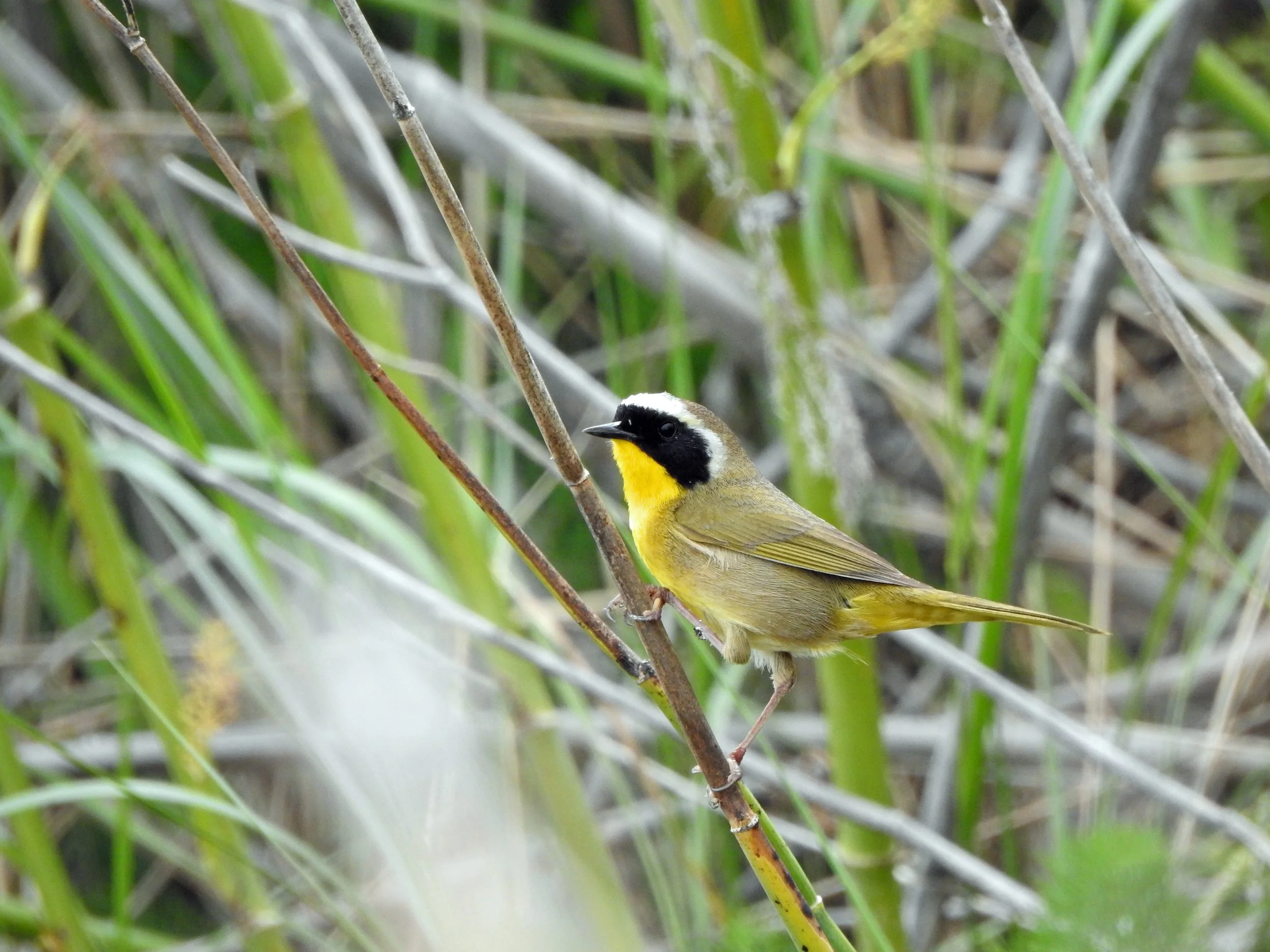
Common Yellowthroat: Susan Weinstein

Mountain View City Council will consider the Biodiversity and Urban Forest Plan on Tuesday June 23rd. This important plan will help shape the future of trees, parks, habitat, and wildlife throughout our city for years to come.

Please write to the City Council or attend the meeting and urge adoption of a strong plan that puts nature first.

Key messages:

  • Biodiversity means supporting entire food webs, from native plants and insects to pollinators, birds, and other wildlife, not simply increasing the number of plant species.

  • Native plants generally provide greater benefits for wildlife and ecosystem health than non-native plants.

  • The definitions of "Regionally Native" and "Near-Native" species should be revised to prioritize plants from the San Francisco Bay Area and Peninsula that support local food webs and ecological relationships.

  • Plants from distant parts of California or North America should not be treated as equivalent to locally native species for biodiversity purposes.

  • The Plan should prioritize locally native plants in parks, habitat areas, and public landscapes whenever feasible.

How to Participate:

  • Send comments: Email City Council at city.council@mountainview.gov and ask that your comments be included in the June 23rd meeting record.

  • Attend the meeting: Tuesday, June 23, 2026, at 6:30 p.m., Mountain View City Hall, 500 Castro Street. Virtual participation options will also be available.

Even a short email can make a difference. Tell Council that Mountain View's biodiversity goals should focus on protecting the ecological relationships that sustain birds, pollinators, wildlife, and healthy urban forests.

Thank you for helping ensure that Mountain View's Biodiversity and Urban Forest Plan reflects the best available science and creates lasting benefits for nature and the community.

Thank you

Mountain View Parks and Recreation Strategic Plan - Comments

May 24, 2026

Re: Item 7.1: Parks and Recreation Strategic Plan

Dear Mayor Ramos and Mountain View Councilmembers,

On behalf of GreenSpacesMV, Santa Clara Valley Bird Alliance, Sierra Club Loma Prieta Chapter, California Native Plant Society, Santa Clara Valley Chapter and Mountain View residents, thank you for the thoughtful work reflected in the Draft Parks and Recreation Strategic Plan and for recognizing biodiversity and the urban forest as core goals of Mountain View’s parks system.

Many of us participated in the public process for this Plan from the beginning. We attended meetings, submitted comments, worked collaboratively, and encouraged community participation throughout the process. At the same time, we advocated for the City’s emerging Biodiversity and Urban Forest Plan, which is moving forward concurrently.

We especially appreciate that, following the recent City study session, the draft Plan now explicitly elevates biodiversity and the urban forest as central goals of the Parks and Recreation Strategic Plan. This is an important and forward-looking shift in how parks are viewed in Mountain View.

The draft Plan includes one of the strongest recognitions yet that biodiversity should be integrated into all parks large and small. In particular, we strongly support the concept of “Biodiversity Anchors” throughout the park system. The recognition that even mini parks can contribute meaningfully to habitat, ecological function, urban cooling, environmental education, and climate resilience through pollinator gardens, small groves of trees, bioswales, and native and habitat-supportive plantings is a major step forward.

We also appreciate the Plan’s broader integration of biodiversity into park design, including emphasis on tree canopy, habitat value, climate resilience, stormwater benefits, and ecological health as core components of the parks system. Equally important is the recognition that access to nature and biodiversity is an equity issue, with stronger focus on underserved neighborhoods and walkable, bikeable access to parks and natural elements.

At the same time, we encourage the City to continue strengthening the Plan as implementation moves forward. In particular, we encourage the City to prioritize locally native plants wherever feasible. While the draft appropriately emphasizes California native and regionally native species, we remain concerned about the use of the term “near-native.” The current definition, “species that are native to a nearby region, such as broader California, the western U.S., or North America generally”, is overly broad and potentially misleading. The term blurs the distinction between locally adapted native vegetation and non-native species that often provide lower ecological value for local food webs, pollinators, and wildlife. The use of this term also creates an unfortunate precedent for other jurisdictions and plans by implying that broad categories of non-local species are ecologically equivalent to locally native vegetation.

Therefore, we respectfully request that this term be removed from both the Parks and Recreation Strategic Plan and the upcoming Biodiversity and Urban Forest Plan prior to adoption.

We further encourage the City to strengthen plan language so that locally native species are not only prioritized, but clearly established as the default planting approach wherever feasible. We also encourage continued coordination with the upcoming Biodiversity and Urban Forest Plan, along with strong transparency, reporting, monitoring, and adaptive management to ensure that biodiversity goals translate into measurable on-the-ground outcomes over time.

Thank you again for advancing a more ecological, climate-resilient, and equitable vision for Mountain View’s parks system.

Sincerely,

Silja Paymer, President
Tracy Ferea, Ph.D., Vice president
GreenSpacesMV

Shani Kleinhaus, Ph.D., Environmental Advocate
Santa Clara Valley Bird Alliance

Bruce England

Judy Fenerty, Conservation Chair
California Native Plant Society, Santa Clara Valley Chapter

Gita Dev, Conservation Chair
Sierra Club Loma Prieta Chapter

Mountain View Parks Plan Embraces Biodiversity in All Parks

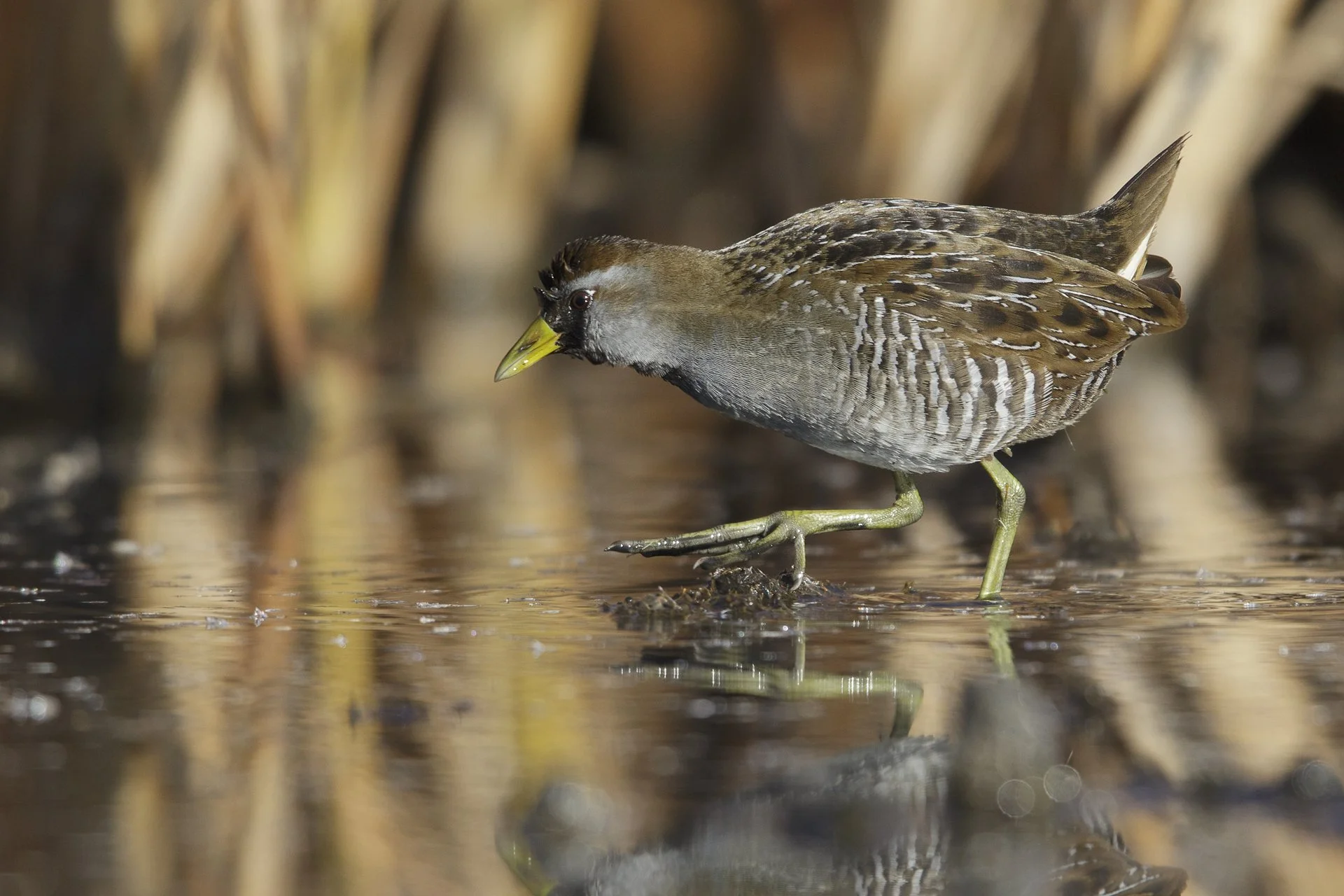
Sora: Luis Villablanca

WHAT IS HAPPENING?

Mountain View’s Draft Parks and Recreation Strategic Plan will go before the City Council for consideration on May 26. The draft Parks Plan includes one of the strongest recognitions yet that biodiversity should be integrated into all parks - large and small.

SCVBA participated in the public process for this Parks Plan from the start. We attended meetings, submitted comments, worked with other community groups such as GreenSpacesMV, and alerted our members to opportunities to participate. At the same time, we advocated for the City’s Biodiversity and Urban Forest Plan, which is moving forward concurrently.

During a recent City study session, we urged the City to elevate biodiversity and the urban forest as core goals of the Parks and Recreation Strategic Plan. The resulting draft Plan now recognizes biodiversity and the urban forest as central goals of Mountain View’s parks system.

A particularly exciting concept is the inclusion of “Biodiversity Anchors” throughout the park system. The draft Plan recognizes that even mini parks can contribute to habitat, ecological function, cooling, and environmental education through features such as pollinator gardens, small groves of trees, bioswales, and California native, regional native plantings.

The draft Plan also thoughtfully integrates biodiversity into park design more broadly, emphasizing trees, habitat, native plantings, climate resilience, stormwater benefits, and ecological health as core parts of the parks system. It further links the parks system to the City’s emerging Biodiversity and Urban Forest Plan, which is expected to come forward soon.

WHY IS IT IMPORTANT?

This represents a major shift in how parks are viewed in Mountain View. Instead of treating biodiversity as something limited to Shoreline, the draft Plan recognizes that every neighborhood park, mini park, trail corridor, and public space can help support pollinators, birds, urban canopy, cooling, and ecological resilience.

The draft Plan also recognizes that access to nature and biodiversity is an equity issue, with stronger focus on underserved neighborhoods and walkable access to parks and natural elements.

At the same time, there is still room to strengthen the Plan. While the draft appropriately emphasizes California native and regional native species, community members may wish to encourage the City to prioritize locally native plants wherever feasible, while using “near-native” species more cautiously and selectively. The term “near-native” itself can be problematic and misleading, as it may blur the distinction between locally adapted native vegetation and non-native species that provide lower ecological value for local food webs and wildlife.

WHAT CAN YOU DO?

Email Mountain View City Council before the May 26 meeting at city.council@mountainview.gov

Thank Mountain View Mayor Ramos, Council members, City staff and the Parks and Recreation Commission for advancing an ecological and equitable vision for Mountain View’s parks system. Encourage support for:

  • Biodiversity integration in all parks - large and small

  • Biodiversity Anchors in mini and neighborhood parks

  • Expanded tree canopy and habitat features

  • Stronger native planting commitments - prioritize locally native plants wherever feasible, and avoid the term "Near-naive”

  • Equitable access to nature across all neighborhoods

  • Continued coordination with the upcoming Biodiversity and Urban Forest Plan

  • Transparency, reporting and adaptive management.