
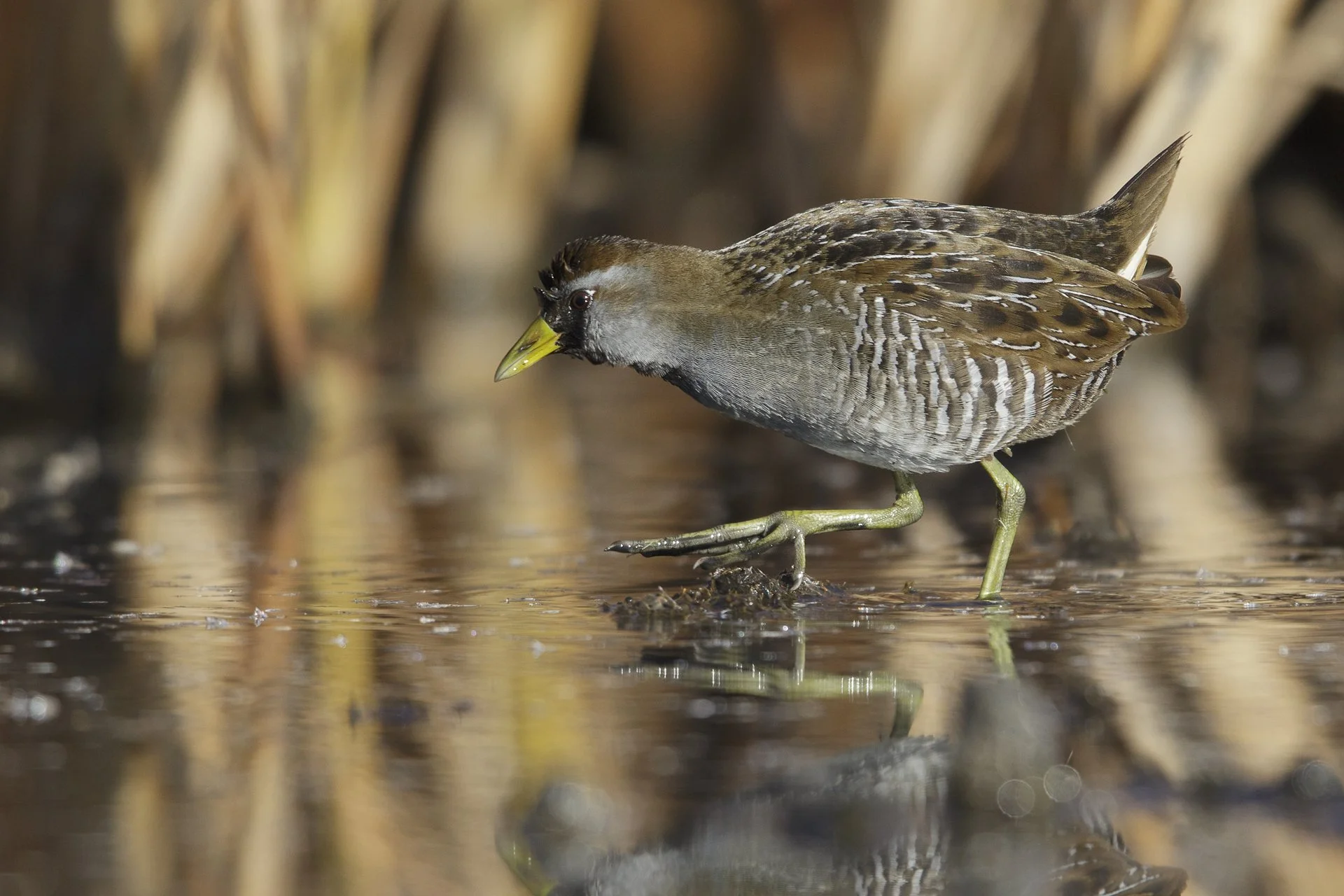
Sora: Luis Villablanca
WHAT IS HAPPENING?
Mountain View’s Draft Parks and Recreation Strategic Plan will go before the City Council for consideration on May 26. The draft Parks Plan includes one of the strongest recognitions yet that biodiversity should be integrated into all parks - large and small.
SCVBA participated in the public process for this Parks Plan from the start. We attended meetings, submitted comments, worked with other community groups such as GreenSpacesMV, and alerted our members to opportunities to participate. At the same time, we advocated for the City’s Biodiversity and Urban Forest Plan, which is moving forward concurrently.
During a recent City study session, we urged the City to elevate biodiversity and the urban forest as core goals of the Parks and Recreation Strategic Plan. The resulting draft Plan now recognizes biodiversity and the urban forest as central goals of Mountain View’s parks system.
A particularly exciting concept is the inclusion of “Biodiversity Anchors” throughout the park system. The draft Plan recognizes that even mini parks can contribute to habitat, ecological function, cooling, and environmental education through features such as pollinator gardens, small groves of trees, bioswales, and California native, regional native plantings.
The draft Plan also thoughtfully integrates biodiversity into park design more broadly, emphasizing trees, habitat, native plantings, climate resilience, stormwater benefits, and ecological health as core parts of the parks system. It further links the parks system to the City’s emerging Biodiversity and Urban Forest Plan, which is expected to come forward soon.
WHY IS IT IMPORTANT?
This represents a major shift in how parks are viewed in Mountain View. Instead of treating biodiversity as something limited to Shoreline, the draft Plan recognizes that every neighborhood park, mini park, trail corridor, and public space can help support pollinators, birds, urban canopy, cooling, and ecological resilience.
The draft Plan also recognizes that access to nature and biodiversity is an equity issue, with stronger focus on underserved neighborhoods and walkable access to parks and natural elements.
At the same time, there is still room to strengthen the Plan. While the draft appropriately emphasizes California native and regional native species, community members may wish to encourage the City to prioritize locally native plants wherever feasible, while using “near-native” species more cautiously and selectively. The term “near-native” itself can be problematic and misleading, as it may blur the distinction between locally adapted native vegetation and non-native species that provide lower ecological value for local food webs and wildlife.
WHAT CAN YOU DO?
Email Mountain View City Council before the May 26 meeting at city.council@mountainview.gov
Thank Mountain View Mayor Ramos, Council members, City staff and the Parks and Recreation Commission for advancing an ecological and equitable vision for Mountain View’s parks system. Encourage support for:
Biodiversity integration in all parks - large and small
Biodiversity Anchors in mini and neighborhood parks
Expanded tree canopy and habitat features
Stronger native planting commitments - prioritize locally native plants wherever feasible, and avoid the term "Near-naive”
Equitable access to nature across all neighborhoods
Continued coordination with the upcoming Biodiversity and Urban Forest Plan
Transparency, reporting and adaptive management.