Lee began monitoring nest boxes in 2002 when his birder spouse Janna wanted to monitor nest boxes. (Cavity nesters nest in cavities. A nest box is an artificial cavity.) She found out that Dave Poeschel had a trail of nest boxes in Guadalupe Oak Grove Park and was looking for someone to take over the trail. So, Janna assumed the trail and Lee helped her. Unfortunately, the nest boxes were mounted on posts and vandals were breaking the posts off. Seeing this they replaced the boxes with boxes hung in the trees in order to place them out of easy reach. Retrieving and hanging the boxes was too difficult for Janna, so Lee told Janna to go birding and that he would monitor the boxes. A Western Bluebird pair nested in one of the park’s 12 nest boxes and successfully fledged 4 nestlings—the first Western Bluebirds fledged from a nest box in the park.
Over time Lee established a total of 34 trials in city and county parks, golf clubs, an archery range, a community garden, and on private property. (A trail can consist of one or more nest boxes.) Some of the trails were closed down and others transferred to new monitors. Lee peaked out one season with about 530 nest boxes, and finished the 2025 season having monitored 376 boxes.
In 2006, while birding in Guadalupe River Park, Janna noticed pair of Western Bluebirds. She called Lee saying “bring some nest boxes”. So, Lee hung some nest boxes in the park and Dave Cook agreed to monitor them. Western Bluebird adults did successfully nest in the boxes—this was the first time in 50 years that bluebirds were seen nesting in downtown San Jose.
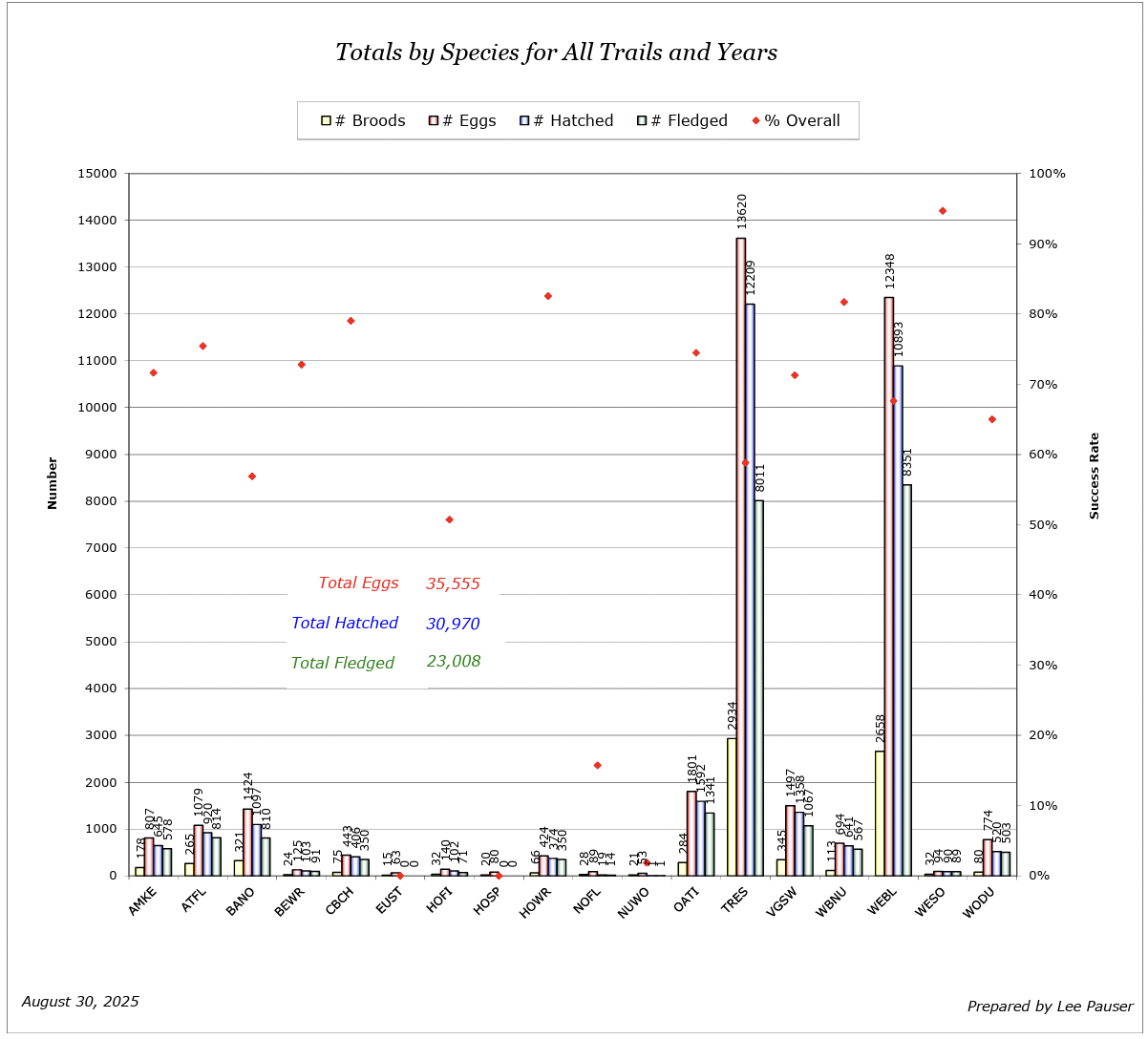
In the 24 seasons that Lee monitored nest boxes 18 species graced his boxes and 23,008 nestlings were fledged. Of this 8,351 were Western Bluebirds. As seasons passed Lee begin hearing “I’ve never seen bluebirds before”. Some friends reported having bluebirds nest in their residential yard in a box Lee had given them.
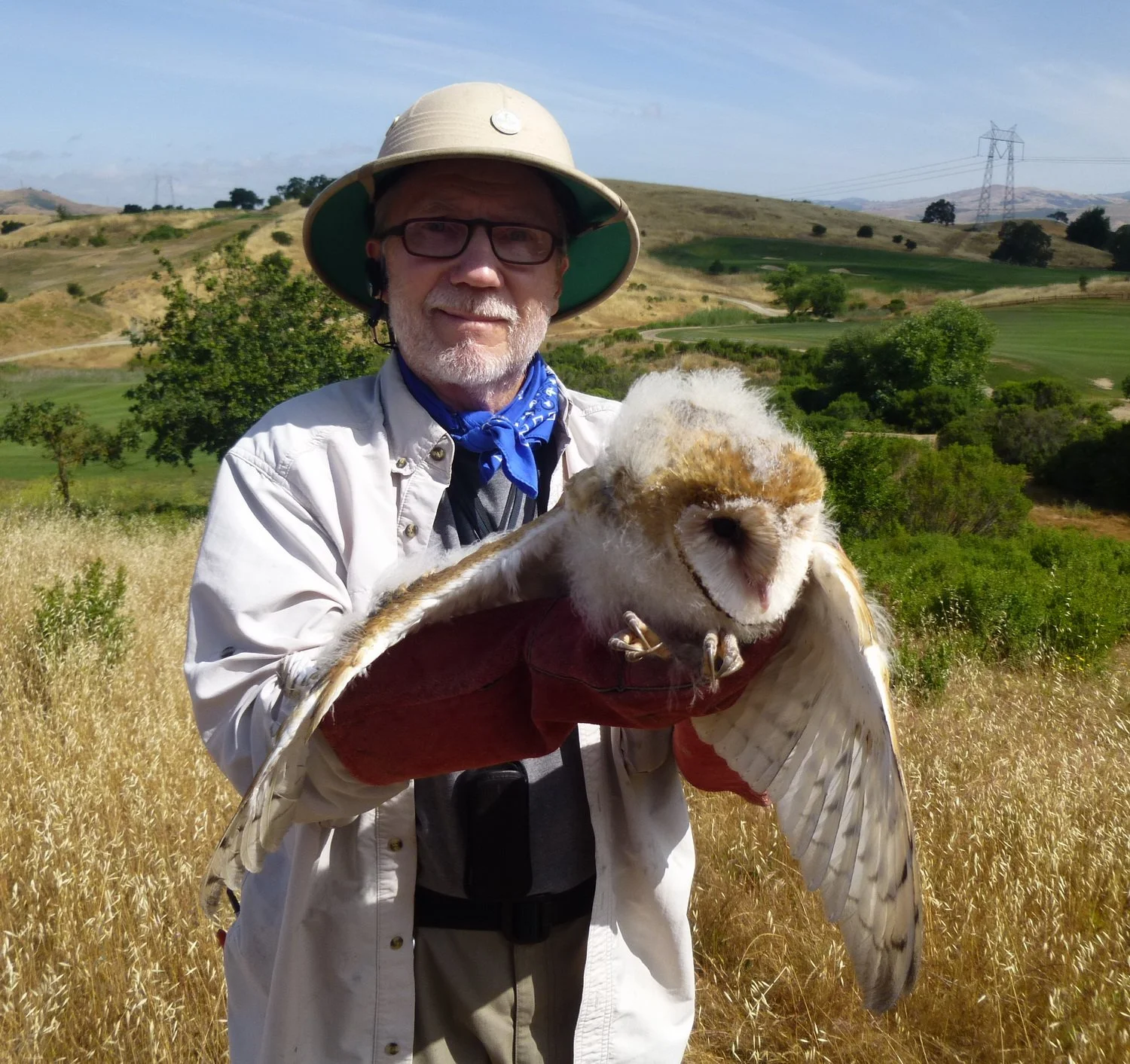
For 10 years Lee worked with Valerie Baldwin, a Wildlife Center of Silicon Valley volunteer, who provided in-home care of rescued Barn Owls to re-nest (wild foster) or release the owls once the are deemed healthy. Owlets that were 2-6 weeks old were placed into boxes with similar aged owlets so the adult owls would raise them. Supplemental food was provided until the owlets fledged to ensure all were fed. In all, 107 Barn Owls were re-nested or released.
Owls that were rescued in the wild were released around dusk in a prey rich environment. Owlets that were too old to re-nest were taught how to capture prey by Valerie, and then similarity released.
Lee reports his nesting data to the California Bluebird Recovery Program. Lee also reports his and other monitor’s detailed nesting data to Cornell’s NestWatch program where the data is entered into a database for use by researchers.
In closing Lee wishes to thank the association for the recognition. The monitors that Lee has given trails to and mentored include Amanda Newlove, Kristen Vehling, Larry Sasscer and Steve Cassidy. Amanda deserves special recognition for having recruited several monitors to assume trails in Almaden Valley. Steve deserves special recognition due to his having assumed several trails totaling over 100 nest boxes in addition to his being a volunteer Land Steward in Santa Teresa County Park with 800 plantings.